
Most QBRs are a colossal waste of time. A proven Quarterly Business Review template, however, is a game-changer. It's the playbook that transforms a routine check-in into a strategic conversation that proves your product's value and locks in renewals.
A solid structure forces you to focus on your customer's goals, not just a list of your own internal metrics. The right template helps you avoid the common traps that make everyone dread the QBR, turning it into an actionable session that drives retention.
Why Most QBRs Fail and How a Template Helps You Win
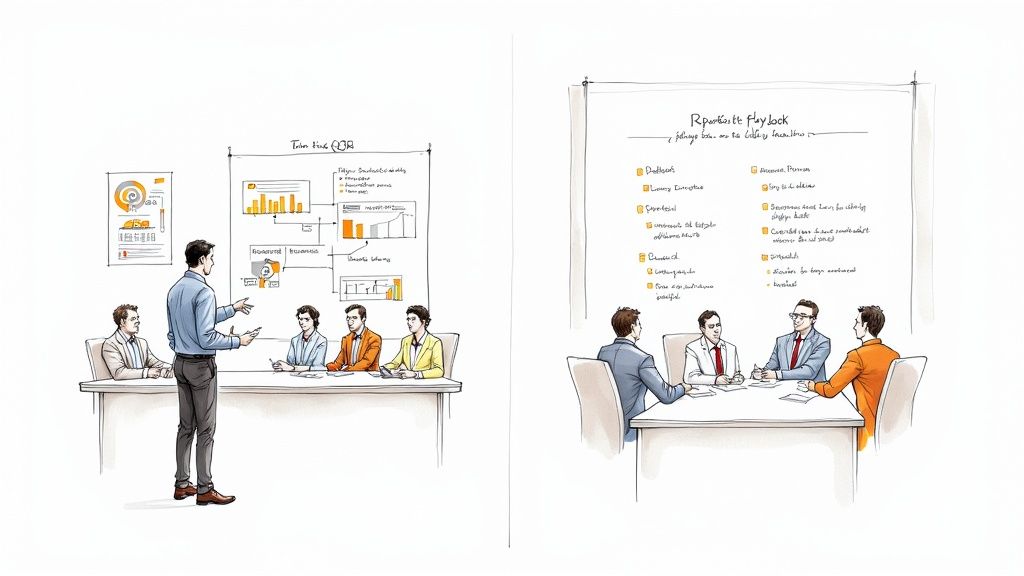
Let's be direct: many QBRs are broken. They devolve into a one-way monologue where a customer success manager talks at their client, burying them in a landslide of vanity metrics and product updates nobody asked for. The customer checks out, you leave without clear next steps, and a renewal opportunity is weakened.
This failure comes down to a lack of structure and a misplaced focus. Without a framework, it's too easy to get lost in the weeds, showing off product features instead of proving actual business value. The meeting feels like a chore, not a partnership.
Shifting From a Report-Out to a Real Partnership
This is where a battle-tested template completely flips the script. It’s not just a slide deck; it's a playbook for keeping the conversation laser-focused on what actually matters: your customer's success. It forces you to connect every single data point back to their specific business goals.
When you standardize your approach with a template, you build consistency and make your entire CS team more efficient. As the former COO of a B2B SaaS that grew to $30M ARR, I saw this firsthand. We initially struggled with inconsistent QBRs, but once we implemented a standardized template, our renewal conversations became radically more effective. We saw a 15-point lift in our Net Revenue Retention (NRR) within two quarters.
Adopting a template isn't just about efficiency; it's about strategically learning how to improve customer satisfaction and cementing those long-term relationships.
A great QBR isn't about what your product did last quarter. It's about what you and the customer will achieve together next quarter. Your template is the guide for that forward-looking conversation.
Ultimately, a good QBR template turns a tactical report into a high-value strategy session. It ensures every review is a data-driven, value-focused conversation that proves you're an essential partner. A well-run QBR is a masterclass in how to run effective meetings, strengthening the relationship and paving the way for renewals and expansion.
Getting Your Hands on the QBR Template (and Making It Your Own)
Let's get you set up with a framework that drives better QBRs. The first step is simple: head over to our free QBR template generator to get instant access. This isn't a static PowerPoint file—it’s an interactive tool designed to build the foundation for a genuinely impactful customer conversation. The generator even includes AI analysis based on your inputs to help you refine the process for retention.
Once you have the template, the real work begins: tailoring it. A generic, one-size-fits-all QBR is the fastest way to lose your customer's attention. The way you talk to a massive enterprise account spending six figures a year should feel completely different from how you engage a smaller, tech-touch SMB customer.
Making the Template Work for Different Customers
The key is to adjust the depth and focus based on the customer segment and your relationship.
-
For your big, high-touch enterprise accounts: These QBRs must be about strategy. Beef up the sections on executive goal alignment, dive deep into long-term roadmap discussions, and present a rock-solid ROI analysis. Spend less time on click-by-click product usage and more on how you're moving the needle on their core business objectives.
-
For tech-touch or low-touch SMBs: Here, efficiency is paramount. The template should be lean. Focus on a few key usage stats, quick wins, and one or two underused features that could provide immediate value. You might even deliver these QBRs in a group webinar or through a semi-automated email.
The point isn't just to dump data on your customer. It's to show them the right data. Customizing your template ensures the conversation is relevant to them, regardless of their size.
Let AI Give You a Pre-Game Pep Talk
Here’s a feature that makes our free QBR template a true operational tool. After you input your initial data—like key metrics, goals, and customer health scores—the tool runs an AI-powered analysis to help you dial in your retention strategy.
Think of it as having a seasoned CS leader review your plan. The AI scans your inputs and provides smart, actionable feedback to sharpen your talking points before you get on the call.
It helps you:
- Spot the "Wow" Moments: It pinpoints which metrics and wins will resonate most with this specific customer, so you can lead with your strongest material.
- Flag Hidden Risks: The analysis can catch downward trends or missed goals that might be a churn warning sign, letting you walk into the meeting with a proactive plan.
- Craft Smarter Questions: You’ll get suggestions for forward-looking questions that open the door to conversations about expansion, new use cases, or their goals for the next year.
This pre-meeting intel is a game-changer. You walk into every QBR more prepared and confident, ready to lead a conversation backed by data but focused on strategy. It's also a great way to build a better internal customer health scorecard over time. If you're looking for ideas on how to structure that data, check out our guide on creating a scorecard format in Excel that can feed right into your QBR prep.
What Goes Into a High-Impact SaaS QBR?
A great QBR isn't a data dump; it’s a narrative. It’s the story of the value you've delivered, the goals you've achieved together, and where the partnership is headed next. When you stop reporting numbers and start connecting those data points to your customer's real-world business objectives, you change the entire conversation.
This is where a solid free QBR template provides an immediate advantage. Think of it less as a rigid script and more as a narrative framework. It gives you a proven structure to guide the discussion, ensuring you hit all key points—from celebrating wins to mapping out the next quarter. The goal is to create a logical flow that builds momentum and naturally leads to crucial conversations about renewal and expansion.
Breaking Down The Key Sections
Every slide in your QBR deck must earn its place. Each one has a specific job to do, designed to spark a particular strategic conversation. You're building a case, piece by piece, for why this partnership is so valuable.
You start by grounding everyone in shared success and then smoothly pivot to what’s on the horizon. This isn't by accident. It’s a deliberate structure that ensures you’re not just showing off metrics, but actually using them to drive a forward-looking discussion.
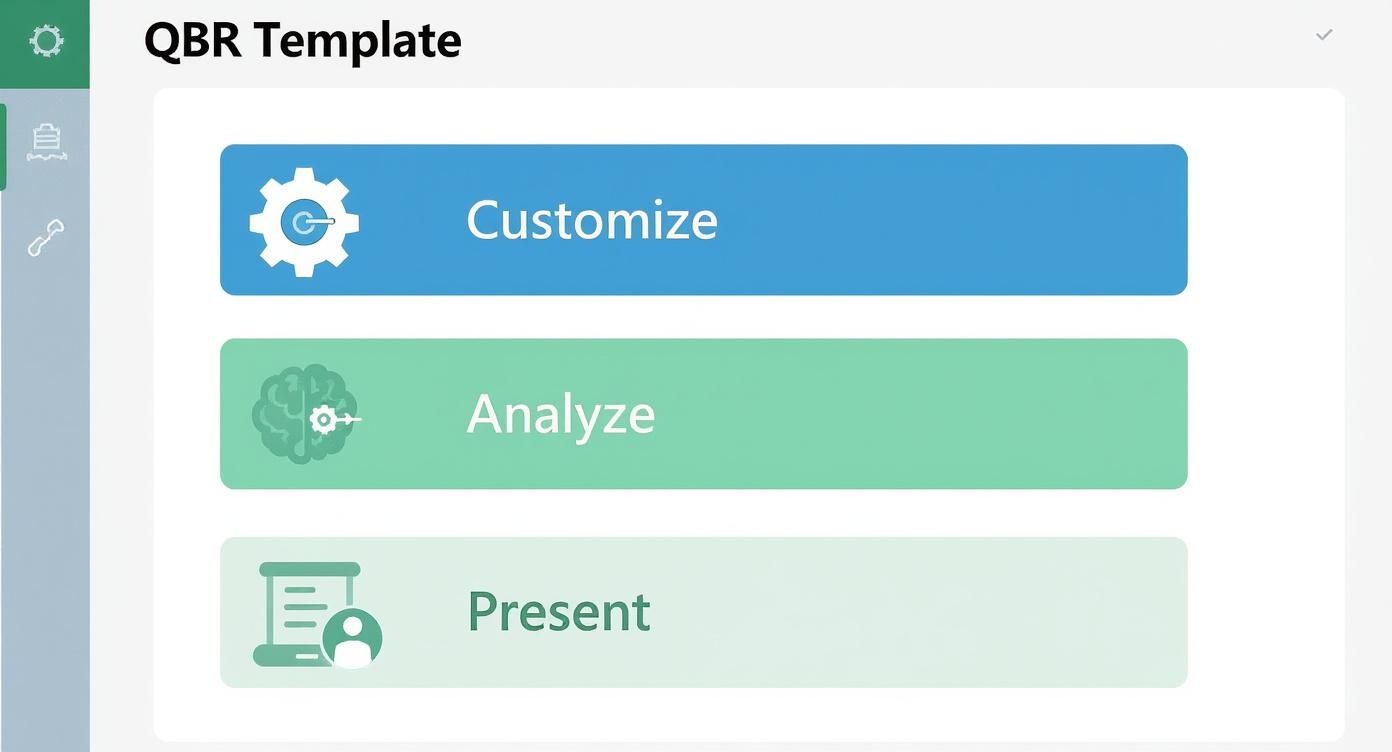
This simple process—Customize, Analyze, Present—is the key. It turns a generic template into a powerful, data-driven story that’s perfectly tuned to your customer's reality.
From Data Points To Real Conversations
Getting this right has a massive financial upside. I've implemented this process across multiple SaaS companies. The consistent result? Companies that nail their QBR process see customer lifetime value jump by an average of 31%. On top of that, they open up upsell opportunities that can add another 18-24% in revenue per customer. These aren't just vanity metrics; they're the direct result of turning routine check-ins into genuine strategic dialogues.
To help you build that kind of conversational muscle, let's look at the essential sections that make up a killer SaaS QBR.
Here’s a quick breakdown of the core components you'll find in any high-impact QBR template. Each section is designed to kickstart a specific part of the strategic conversation.
Essential QBR Template Sections and Their Purpose
| Template Section | Objective | Key Data Points | Conversation Starter |
|---|---|---|---|
| Executive Summary | Get everyone on the same page and set a positive tone for the meeting. | Big wins, ROI highlights, and key milestones from the last quarter. | "Looking back at the last 90 days, what was the single biggest win you felt from our partnership?" |
| Performance Review | Show, don't just tell, the value you're delivering with hard data. | Product usage trends, customer health score, and progress against key performance indicators (KPIs). | "We're seeing strong adoption here. How can we get other teams to see this kind of success?" |
| Goal Alignment | Re-center the conversation on their business objectives. Things change. | A quick recap of their stated goals and the progress made against them. | "Are these still the right priorities for the coming quarter, or has anything shifted on your end?" |
| Roadmap & Future Plans | Build excitement and show them you're invested in their future success. | Relevant upcoming features, a joint success plan, and potential expansion opportunities. | "Based on your goals, we think these upcoming features are going to be game-changers for you." |
Each of these sections needs real prep work, especially when it comes to picking the right metrics to showcase.
If you’re not sure which numbers matter most, our guide to the most essential SaaS KPIs is a great place to start. A little homework here goes a long way, ensuring you walk into that room ready to lead a conversation that truly matters.
Running Your QBR Like a Seasoned Pro
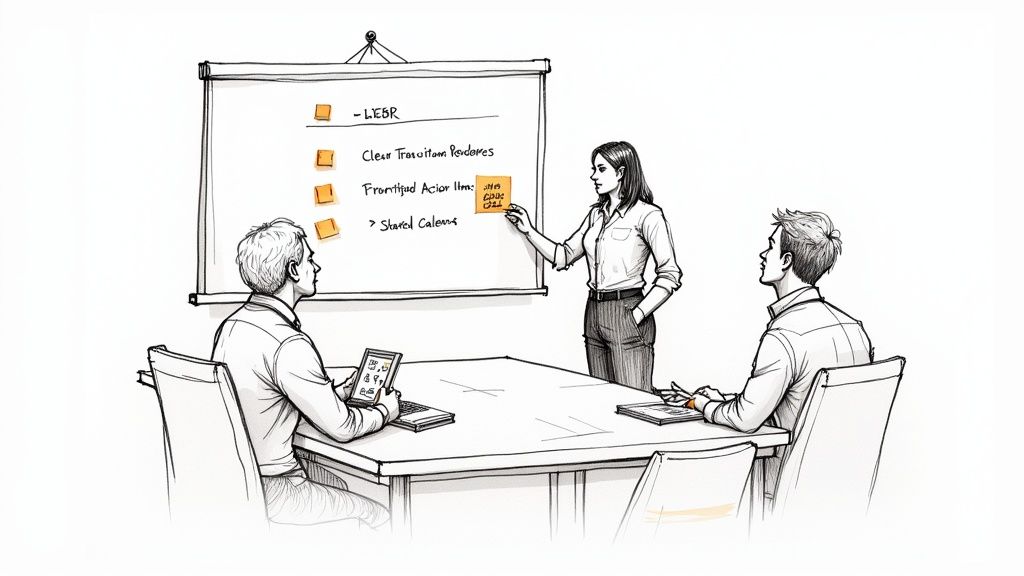
Having a killer free QBR template is a fantastic start, but it's only half the battle. What separates a forgettable data dump from a strategic game-changer is how you deliver it. The best SaaS operators I know treat the QBR as a process, not just a meeting, and it all begins with thoughtful preparation.
The real work happens before the call. That means getting a crystal-clear agenda into everyone's hands at least 48 hours in advance. This isn't just a formality; it's a strategic move. It gives everyone time to digest the key points and come ready to talk, turning a one-way presentation into a real, collaborative session. Nobody wants to be put on the spot with a screen full of new data.
Transforming Your QBR into a Strategic Workshop
Your main job here is to spark a conversation, not to deliver a monologue. The easiest way to get your customer talking is to weave open-ended questions throughout your deck. Don't just show them a graph and move on; frame it as a jumping-off point for a discussion.
Try questions like these:
- "We noticed a 30% increase in your team using feature X. What changed on your end to make that happen?"
- "Looking at these trends together, where do you think the biggest opportunity is for you next quarter?"
- "Honestly, this number surprised us. Can you tell me the story behind it from your side?"
See the difference? This simple shift invites them into the narrative and makes them a partner in figuring things out, not just a spectator.
The most impactful QBRs I’ve been a part of felt less like a review and more like a joint planning session. The moment you stop 'presenting' and start 'strategizing' together is the moment the relationship deepens.
Of course, how you say things matters just as much as what you say. A confident, clear delivery builds trust and shows you know your stuff. If you want to brush up on your presentation game, there are some great general tips for delivering an impactful presentation that are super relevant here.
Navigating Feedback and Defining Next Steps
No matter how well you prepare, you're going to get hit with tough questions or unexpected feedback. This is a good thing. Don't get defensive; lean into it. Critical feedback is gold—it’s a direct look into your customer’s world. Acknowledge what they're saying, ask questions to understand more, and make it clear you're going to solve it together.
And finally, the most critical part of a pro-level QBR: never, ever end the meeting without clear, agreed-upon action items. Before you wrap up, spend the last few minutes summarizing the takeaways and assigning an owner to each "next step." This simple habit is what drives accountability and keeps the momentum going straight into the next quarter.
This isn't just theory, either. At a previous company, we made "documented action items" a mandatory field in our CRM after every QBR. This single process change improved our renewal rates by 22% within a year. You can dig into more on that over at Miro.com.
The Post-QBR Follow-Up That Secures Renewals
The QBR isn’t over just because you clicked "Leave Meeting." The most important part is just getting started. What you do next is where you turn a great conversation into real, measurable progress. It’s how you lock in the value you just demonstrated and set the partnership up for success.
Skipping this step is like running a marathon and stopping a foot short of the finish line. All that goodwill and alignment you worked so hard to build can vanish if you don't provide a clear, documented path forward.
The goal here is simple: immediately turn strategic discussions into tactical action. Everyone needs to walk away knowing exactly what they’re responsible for and when it's due. This act of organized follow-through is what turns a good QBR into a renewal-driving machine.
Your Immediate Post-QBR Action Plan
The absolute best practice is to send your follow-up within 24 hours of the meeting. The conversation is still fresh, and the energy is high.
Your follow-up email needs to be concise, clear, and focused on action. Think of it as a summary and a commitment tracker.
An effective follow-up email nails three key things:
- A quick recap of wins and insights. Start on a high note. Briefly restate the key successes and "aha!" moments from the discussion to reinforce the value you delivered.
- Clearly defined action items. This is the core of the email. List every task that was agreed upon. Use a simple format: Task, Owner, and Due Date. No ambiguity.
- A thank you and a look ahead. Wrap it up by genuinely thanking them for their time and partnership. Add a quick line about how excited you are for the upcoming quarter.
This kind of structured follow-up isn't just a nice-to-have anymore; it’s becoming the standard. Around 73% of enterprise companies now run QBRs with their key clients, a huge jump from 58% five years ago, which shows how much the industry is leaning into structured engagement. You can dig into more of this trend over at Miro.com.
Documenting Outcomes for the Long Haul
The email is for immediate alignment, but there's one last step: formalizing everything on your end.
Log all key takeaways, action items, and any new customer intelligence you gathered directly into your CRM or customer success platform. This creates a running history of the relationship’s progress, which is invaluable.
Documenting QBR outcomes isn't just busywork. You're literally building the foundation for your next conversation. It ensures you kick off the next QBR with proof that you deliver, not with a blank slate.
This continuous loop—communication, action, documentation—is the foundation of a strong partnership. It makes the renewal conversation feel like the natural, logical next step, not a high-pressure sales pitch. This entire process is a core part of any effective strategy, which we break down in our complete customer success playbook.
When you absolutely nail the post-QBR process, the value of that one meeting echoes throughout the entire quarter.
Got Questions About Using a QBR Template? We’ve Got Answers.
Even with a killer template, running your first few QBRs can be intimidating. That’s normal. Let's walk through the most common questions we hear from SaaS operators, so you can feel confident from day one.
How Much Data is Too Much?
This is the number one question. It's tempting to throw every chart you have into the deck to prove value. Resist that urge.
The key is to be ruthless. Only present the three to five core metrics that directly demonstrate progress toward the specific business goals you and the customer agreed upon. Anything else is noise that distracts from the main story.
Who Actually Needs to Be in This Meeting?
Figuring out the invite list can be tricky. Do you just need your day-to-day champion, or should you push to get their boss on the calendar?
For your most strategic, high-value accounts, absolutely push to get an executive sponsor in the room. When a leader is present, the conversation instantly shifts from a tactical check-in to a high-level strategic planning session. For smaller accounts, your main contact is usually sufficient. It's about having the right decision-makers there, not just packing a crowded Zoom call.
Here's a pro tip: Don't treat your QBR template like a rigid script. It's a flexible framework. The real value comes from the two-way conversation it sparks, not from a one-sided data dump.
"Quarterly" Is in the Name, but Is That the Right Cadence?
Just because it's called a QBR doesn't mean you're locked into a strict 90-day schedule for every customer. The right frequency depends on the client.
- Top-Tier/Strategic Accounts: A full QBR every 90 days is spot on.
- Mid-Tier/Tech-Touch: A lighter, bi-annual review might make more sense. You don't want to force a cadence that doesn't match the complexity or value of the relationship.
The good news is that the rise of templates has made this process more manageable. You no longer need a pricey, dedicated platform to run a professional review. As platforms like Miro show, great templates have leveled the playing field, allowing companies of all sizes to build stronger customer relationships.
Ready to stop having routine check-ins and start having renewal-driving strategy sessions? SaaS Operations gives you the battle-tested frameworks to make it happen. Grab our free QBR template generator and let its AI-powered analysis help you find key insights before you even book the meeting.