A Guide to Understanding and Reducing SaaS Churn Rates
 Published By: Alex
December 16, 2025
Published By: Alex
December 16, 2025
Your churn rate isn't just another metric; it's the unfiltered truth from your customers. In simple terms, SaaS churn is the percentage of customers who cancel their subscription over a specific period. It's the ultimate report card on your product, customer success, and overall value proposition. High churn means you've built a 'nice-to-have' tool. Low churn means you're indispensable.
What Your SaaS Churn Rate Is Really Telling You
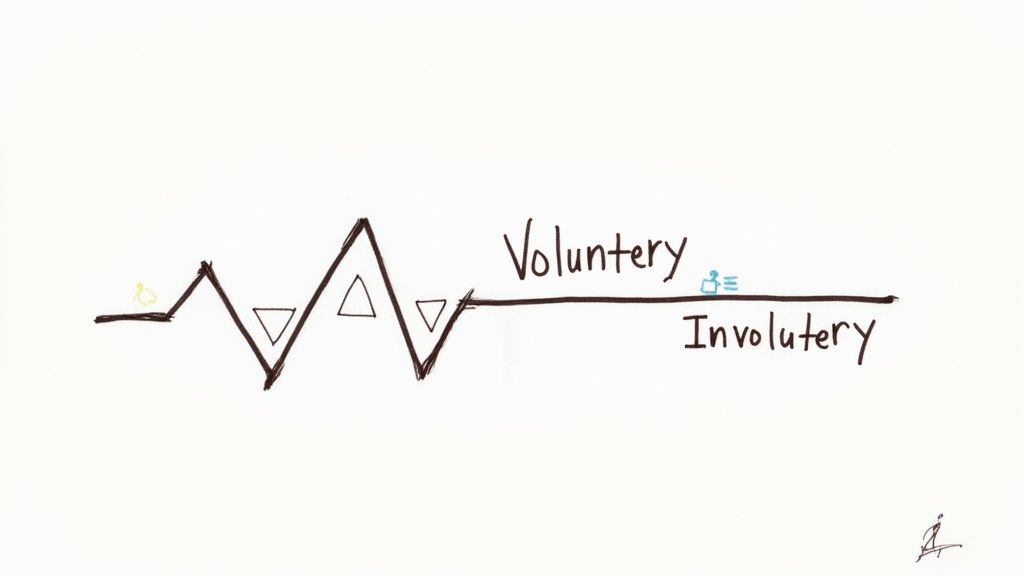
Think of churn as your company's pulse. A low, steady pulse suggests a healthy product that customers can't imagine living without. A high or spiking rate is a critical warning. Ignoring it is like ignoring a check engine light—you might get away with it for a while, but a breakdown is inevitable.
To diagnose the problem, you first need to understand the two types of churn.
Voluntary Churn
This is the one that stings. Voluntary churn is when a customer makes the conscious decision to cancel. The reasons are a direct, painful critique of your business: they found a better competitor, the product didn't deliver on its promise, or their needs changed and your solution wasn't flexible enough. This feedback is brutal but essential for improving your product-market fit.
Involuntary Churn
This is the accidental kind. Involuntary churn happens when a customer's subscription ends due to a payment failure—an expired credit card, a bank decline, or an outdated billing address. They didn't intend to leave. This is the "low-hanging fruit" of churn reduction because the fix is operational, not strategic.
So, Is My Churn Rate Good or Bad?
Let's talk numbers. What's a "healthy" churn rate? While it varies by industry and customer segment, industry benchmarks provide a crucial starting point.
Here's a quick look at typical SaaS churn rates.
SaaS Churn Rate Benchmarks at a Glance
| SaaS Model | Typical Monthly Churn Rate | Healthy Annual Churn Rate Target |
|---|---|---|
| SMB & Mid-Market | 3-7% | 36-84% |
| Enterprise | 1-2% | 12-24% |
| Early-Stage Startup | 5-10%+ | Varies widely |
These figures give you a solid baseline. Currently, the average monthly churn for B2B SaaS companies is around 3.5%, breaking down into roughly 2.6% voluntary churn and 0.8% involuntary churn. Enterprise-focused companies often achieve an annual churn between 1-2%. You can dig deeper into these SaaS churn benchmarks over at Vitally.io.
“Churn is the ultimate report card on your customer experience. It tells you whether you've built something customers can't live without or just something they can easily replace.”
Understanding these numbers is your first step. Remember, churn isn't just lost customers; it's a direct hit to revenue and growth potential. High churn is like trying to fill a leaky bucket—it makes growth nearly impossible. The best way to see this complete picture is through Net Retention Rate, which we cover in our in-depth guide on the topic.
How to Calculate Churn the Right Way
Get your churn calculation wrong, and you're flying blind. Tracking the wrong numbers creates a false sense of security while revenue silently evaporates. To get a true pulse on your company's health, you need to master the two churn metrics that matter most: Gross and Net Revenue Churn.
Think of it this way: Gross Churn measures how much water is leaking out of your revenue bucket. Net Churn tells you if you’re refilling it from existing customers faster than it’s leaking out.
Measuring the Leak with Gross Revenue Churn
Gross Revenue Churn is the cold, hard truth. It’s the raw measure of Monthly Recurring Revenue (MRR) you lost from customers who canceled or downgraded. There's no sugarcoating—it isolates the damage.
The formula is straightforward:
Gross Revenue Churn Rate = (MRR Lost to Churn & Downgrades in a Period / MRR at the Start of the Period) x 100
Let’s run a real-world scenario. Imagine AnalyzeCo, a SaaS business, starts June with $50,000 in MRR. During the month, $4,000 in MRR is lost from cancellations and another $1,000 from downgrades.
- Churned MRR: $4,000
- Downgrade MRR: $1,000
- Total Lost MRR: $5,000
- Starting MRR: $50,000
Their Gross Revenue Churn is ($5,000 / $50,000) x 100 = 10%.
That 10% is an unambiguous signal to the AnalyzeCo team: they lost a tenth of their revenue base in 30 days. This metric is a critical health check because it highlights the real impact of churn without letting growth mask the problem.
Seeing the Bigger Picture with Net Revenue Churn
While Gross Churn delivers the painful truth, Net Revenue Churn tells the story that excites savvy investors. It provides a complete picture by factoring in the expansion MRR—revenue gained from existing customers through upgrades and add-ons.
This metric is the ultimate test of customer love. When happy customers spend more, they can offset the revenue lost from unhappy ones.
The formula adds one key variable:
Net Revenue Churn Rate = [(MRR Lost to Churn & Downgrades) – (Expansion MRR)] / MRR at the Start of the Period x 100
Let’s return to AnalyzeCo. They lost $5,000 in MRR. But during that same month, their customer success team drove $7,000 in expansion MRR from existing customers upgrading their plans.
Now the story changes.
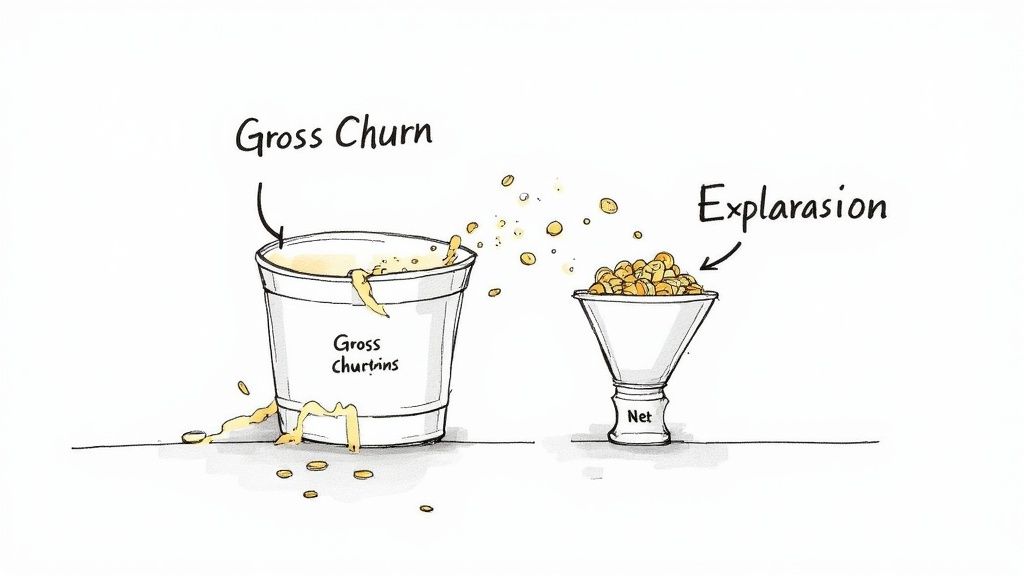
For AnalyzeCo, the new calculation is: [($5,000) – ($7,000)] / $50,000 x 100 = -4%.
That's right—a negative number. This is the holy grail for SaaS. A -4% Net Revenue Churn means AnalyzeCo grew its revenue by 4% from its existing customer base alone, after accounting for churn. It's definitive proof that their product is sticky and their land-and-expand strategy is working.
Want to run your own numbers? Use our free SaaS churn rate calculator for an instant analysis.
The True Cost of a High Churn Rate
A high churn rate is a silent business killer. It actively works against every dollar you spend on growth, making your hard work feel like running up a down escalator.
The damage goes far beyond lost MRR. It sends shockwaves through your company's financial pillars, creating a domino effect that can stop a promising startup in its tracks. Ignoring churn isn't just a bad habit; it's an existential threat.
Churn Decimates Your Customer Lifetime Value
First, churn demolishes your Customer Lifetime Value (LTV), the total revenue you can expect from a single customer. When they leave prematurely, all of that future revenue vanishes.
Every customer who churns drags down the average "lifespan" of your entire customer base. This means every new customer you acquire is worth less from day one, as they are statistically less likely to stick around long enough to become profitable.
For a deeper dive, check out our guide on calculating and improving SaaS Lifetime Value. Viewing retention as a growth engine, not just a defense, is critical.
It Inflates Your CAC Payback Period
High churn also destroys your cash flow by extending your Customer Acquisition Cost (CAC) payback period—the time it takes to earn back the money you spent to acquire a customer.
Imagine you spend $1,000 to acquire a customer paying $100/month. Your ideal payback period is 10 months. But if your average customer churns after only six months, you never break even. You are literally paying to lose money on each customer.
"The cost of acquiring a new customer is 5x higher than retaining an existing one. High churn forces you to constantly refill a leaky bucket, burning cash just to stand still."
This dynamic traps you in an expensive cycle. You're forced to spend more on sales and marketing just to replace lost revenue, while the time to see a return on that spending gets longer. It’s a fast track to burning through your cash reserves.
Churn Makes Revenue Forecasting Impossible
Finally, churn makes financial planning a guessing game. How can you forecast revenue when a significant chunk could vanish next month? High and unpredictable churn turns your financial models into fiction.
This instability creates real operational problems:
- Hiring Plans: You can't confidently hire new talent if you're unsure you can cover their salary in six months.
- Product Roadmaps: Big investments in new features feel incredibly risky when your customer base is eroding.
- Investor Confidence: Investors hate unpredictability. A high churn rate is a giant red flag that signals a fundamental weakness in your business model.
Ultimately, churn isn't just about losing customers. It's about losing value, burning cash, and creating an unstable foundation that makes it impossible to plan for the future.
Your Playbook for Reducing Voluntary Churn
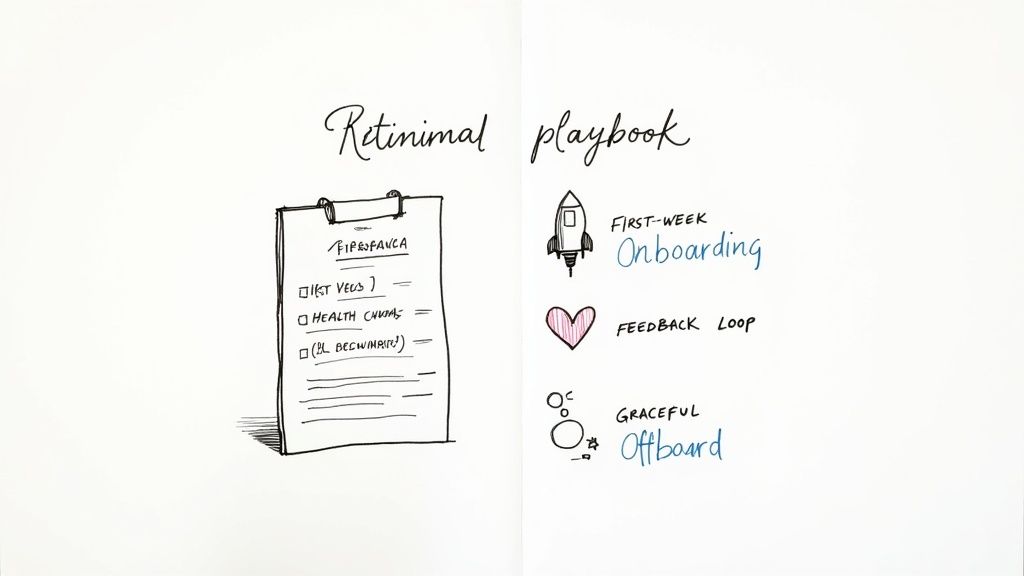
Let's shift from defense to offense. Fighting voluntary churn—when customers consciously decide to leave—is about creating an experience so valuable that leaving feels like a downgrade for their business. These are battle-tested plays used by top-tier SaaS companies.
Play 1: Nail the First Week Onboarding
The first week is everything. A clunky, confusing start plants a seed of doubt that's almost impossible to remove. Your goal is to get the customer to their first "aha!" moment as quickly as possible. This is where you prove the value you promised during the sales process.
Actionable Example: Slack famously discovered that when a team sends 2,000 messages, their likelihood of churning drops dramatically. Their entire onboarding flow is engineered to guide users toward this activation metric.
- Your Next Step: Identify your own "2,000 messages" moment. What is the single key action that correlates with long-term retention? Focus your entire onboarding experience on achieving that win for the customer in their first session.
A strong first week builds momentum that lasts. Dive deeper with our guide to SaaS onboarding best practices.
Play 2: Set Up Proactive Customer Health Checks
Don't wait for the cancellation email; by then, it's too late. Elite operators use leading indicators to spot at-risk customers before they've decided to leave.
Actionable Example: A B2B project management tool notices that their stickiest customers integrate with both Google Calendar and their accounting software within 14 days. They build a health score based on these actions.
- Your Next Step: Define what a "healthy" user looks like in your app. Create automated triggers based on behavior:
- Usage Dips: If a daily active user hasn't logged in for 5 days, trigger an automated, personal check-in email from a Customer Success Manager (CSM).
- Key Feature Neglect: If a user hasn't adopted a critical feature after 30 days, send a targeted in-app guide or invite them to a short webinar.
- Support Ticket Spikes: A sudden flood of tickets from one account is a major red flag. This should trigger a proactive phone call from your CSM.
This transforms your customer success team from reactive firefighters into proactive advisors.
Play 3: Build a Feedback Loop That Powers Your Roadmap
Customer complaints aren't a nuisance; they are free consulting. Every piece of feedback, especially from a churning customer, tells you exactly where your product is broken.
Actionable Example: The team at Zapier treats their support tickets as a primary source for their product roadmap. When they see a recurring request for a specific app integration, they fast-track it. This not only improves the product but also demonstrates to customers that their voice matters.
- Your Next Step: Create a system to tag and quantify all customer feedback from support tickets, cancellation surveys, and sales calls. Review the top 3-5 requests every month in your product planning meetings. When you ship a feature based on feedback, email the customers who requested it.
Turning frustration into fuel for your roadmap is how you build an indispensable product.
Play 4: Create a Graceful Offboarding Process
Even with a world-class product, some customers will leave. How you handle their exit determines whether they leave angry or with respect—and maybe even return one day.
Actionable Example: When a customer cancels their subscription for the project management tool Basecamp, they aren't just shown a confirmation screen. They are presented with a simple, one-question survey: "What's the primary reason you're leaving?" with clear multiple-choice options and a free-text box. This data is reviewed weekly by the leadership team.
- Your Next Step: Implement a mandatory, one-question exit survey in your cancellation flow. Don't try to win them back with a desperate discount. Focus on understanding the "why" behind their decision so you can prevent the next customer from leaving for the same reason.
For more strategies, check out this a practical playbook for reducing customer churn.
A Tactical Guide to Eliminating Involuntary Churn
Want the easiest, fastest win in your fight against churn? Eliminate involuntary churn. This is churn from failed payments, and it's pure, preventable revenue loss. It can account for a staggering 20-40% of your total churn, and every one of these customers wanted to stay.
Fixing this is about operational excellence. This is your tactical checklist for clawing back that revenue, using the same dunning management playbook that companies like Stripe and Chargebee have perfected.
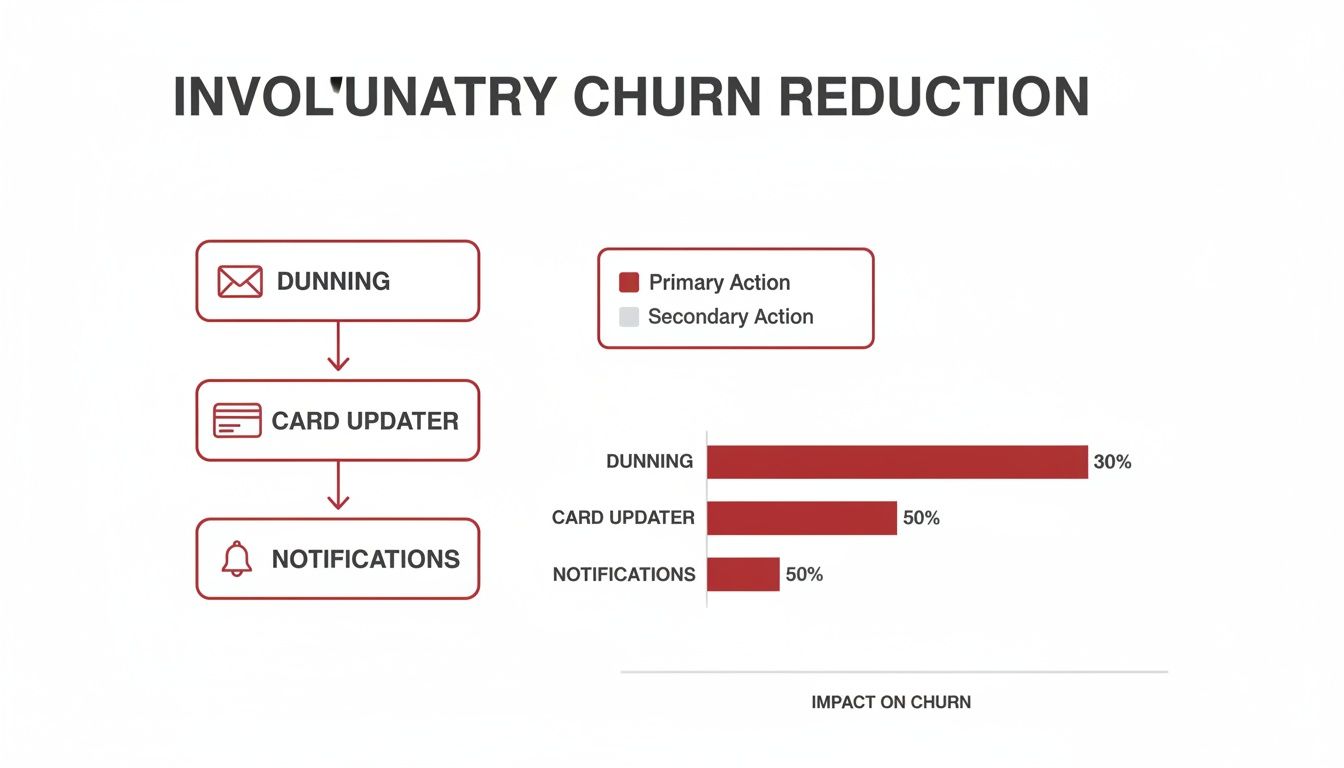
It’s a multi-layered defense: proactive communication, behind-the-scenes automation, and clear user guidance.
Automate Your Card Updater Service
This is non-negotiable. An automatic card updater is a service from your payment processor (like Stripe) that communicates directly with card networks (Visa, Mastercard). When a customer's card is reissued, this service updates the card number and expiration date in your system automatically. The customer does nothing. You do nothing. The payment just works. This is the single most effective way to prevent payment failures before they happen.
Implement a Smart Dunning Sequence
Dunning is how you communicate with customers about billing issues. A "smart" dunning process is automated, respectful, and crystal clear.
- The Pre-Dunning Nudge: Send a friendly heads-up email 7-10 days before a card is set to expire. This lets them fix it proactively.
- The Instant Failure Alert: The moment a payment fails, send a notification. The tone is key: "We had a little trouble processing your payment," along with a direct, one-click link to update their billing info.
- The Gentle Follow-Ups: Send 2-3 more emails over the next 1-2 weeks. Use different subject lines like "Update Your Billing Info for [Your SaaS]" and "Action Required: Your [Your SaaS] Account is Past Due."
Pro Tip: Keep your dunning emails laser-focused. The only goal is to get the customer to click the "Update Payment Method" button. Remove all other marketing links or product updates.
Use Clear In-App Notifications
Emails get buried. Back them up with persistent in-app notifications. When a user with a failed payment logs in, they should see a highly visible banner at the top of the screen. Use simple language: "There's an issue with your subscription. Please update your billing details to maintain access." Link that banner directly to the payment update page.
Offer a Flexible Grace Period
Never cut off a customer's access the second a payment fails. This creates a panic-inducing experience and can cause a frustrated user to churn for good. Instead, build in a flexible grace period of 14 to 30 days. During this time, the customer can still use your product while your dunning process works in the background. It turns a potential crisis into a minor to-do item, dramatically improving your odds of recovery.
How to Build a Churn Reporting Dashboard
You can't fix what you can't see. Tracking a single churn rate is like only looking at your car's speedometer—it tells you how fast you're going, but not if you're about to run out of gas. A proper churn dashboard reveals the leading indicators that signal trouble long before a customer cancels.
While tools like ChartMogul or Baremetrics are excellent, you can build a powerful version of this in a spreadsheet.
Key Metrics for Your Dashboard
A great dashboard tells a story. It moves beyond a single number to show you who is leaving, why they're leaving, and if your retention efforts are working.
- Gross vs. Net Revenue Churn Trends: Plot both on a line chart month-over-month. Is gross churn rising? Is expansion revenue hiding a leaky bucket? This view instantly shows you the real health of your revenue base.
- Cohort Analysis: This is non-negotiable. Group customers by their signup month and track their retention over time. It's the only way to prove that your recent product updates or onboarding improvements are actually making customers stickier.
- Churn Segmented by Plan: Break down your churn rate by each pricing tier. You might discover your starter plan has a 30% churn rate while your enterprise plan has almost none. This tells you exactly where to focus your retention efforts.
Developing a Customer Health Score
A customer health score is your early-warning system. It’s a custom metric that rolls up key product usage signals into a single score, helping you spot at-risk accounts before they go dark.
Actionable Example: A CRM company identifies that its most successful customers do three things: 1) log in daily, 2) import their contacts within 48 hours, and 3) set up at least one automated email sequence.
- Your Next Step: Define 3-5 of these "sticky" behaviors for your product. Create a simple points system (e.g., 5 points for daily logins, 3 for integrations). Any account with a score below a certain threshold gets automatically flagged for a proactive check-in from your success team.
This system flips retention from a reactive firefighting drill into a proactive strategy. For a deeper dive, check our guide on business scorecards and dashboards.
Essential Churn Dashboard Metrics
| Metric | What It Measures | Tracking Frequency |
|---|---|---|
| Gross Revenue Churn | The total monthly recurring revenue (MRR) lost from cancellations and downgrades. | Monthly |
| Net Revenue Churn | The net change in MRR after accounting for expansion and upgrade revenue. | Monthly |
| Logo Churn | The percentage of customers who cancelled their subscriptions in a given period. | Monthly |
| Cohort Retention Curve | The percentage of customers from a specific signup month who are still active over time. | Monthly (for new cohorts) |
| Customer Health Score | A predictive score indicating an account's risk of churning based on their behavior. | Weekly/Daily |
| CAC Payback Period | How many months it takes to earn back the cost of acquiring a customer. | Monthly |
Keeping these numbers top of mind ensures you're never flying blind.
Got Questions About Churn? We've Got Answers.
We've unpacked a lot, but a few questions always pop up when founders and operators start getting serious about churn. Here are some quick, straight-to-the-point answers to the most common ones.
What Is a Good SaaS Churn Rate?
There's no single magic number, but a solid benchmark for most B2B SaaS companies is 5-7% annually.
Of course, it gets more nuanced. If you sell to small businesses (SMBs), a monthly churn of 3-5% is pretty standard. But if you’re focused on enterprise clients, you should be aiming for under 1% monthly.
The most important thing? Don't get hung up on industry averages. Track your own churn rate month-over-month. That’s the real test of whether your retention strategies are actually working.
How Can I Reduce Involuntary Churn Quickly?
This is the low-hanging fruit of revenue recovery. The fastest way to fix involuntary churn—the kind that happens because of failed payments—is to automate the heck out of your dunning process.
- Automatic Card Updaters: Most modern payment processors can automatically update expired card details for you. Turn this on.
- Smart Dunning Emails: Don’t wait for a payment to fail. Send friendly, automated reminders before a card is about to expire, and a clear sequence of emails after a payment fails.
- In-App Notifications: A simple, non-annoying banner inside your app that says "Hey, we've got a billing issue" can work wonders.
Should I Focus on Logo Churn or Revenue Churn?
You have to track both, but revenue churn tells the real story about your business's health.
Think about it: losing ten tiny customers who pay you $10 a month has a completely different financial impact than losing one enterprise client paying you $10,000 a month. Logo churn would make those scenarios look much more similar than they actually are.
Net revenue churn is the metric that truly defines sustainable growth. It shows whether your expansion revenue from happy customers is outpacing the revenue lost from those who leave. Achieving negative net revenue churn is the ultimate goal.
What Is the Biggest Mistake Companies Make with Churn?
The biggest mistake is treating churn as a fire that only the customer support team is supposed to put out. If you're waiting for a customer to email you saying they want to cancel, you've already lost.
Reducing churn has to be a proactive, company-wide mission. It starts with your product team building something people can't live without. It involves your marketing team attracting customers who are a perfect fit. And it requires your success team to be on the lookout for warning signs long before a customer thinks about leaving.
Churn isn't just a number on a dashboard; it's a vital sign for your entire company.
Ready to build a more efficient, data-driven SaaS business? SaaS Operations provides the battle-tested playbooks, templates, and SOPs you need to accelerate growth. Stop guessing and start implementing proven frameworks today. Learn more at https://saasoperations.com.