How to Delegate Tasks Effectively and Grow Your Team
 Published By: Alex
September 8, 2025
Published By: Alex
September 8, 2025
Learning to delegate is more than just making a to-do list for someone else. It’s a fundamental change in how you operate, a true shift from being a "doer" to a leader. This is where you trade day-to-day control for trust and swap tactical tasks for strategic oversight. Honestly, it's the single most important transition any SaaS operator can make to scale their business—and themselves.
The Mindset Shift for Effective Delegation

It's natural for SaaS leaders to resist handing off work. I've heard it a million times, and I've even thought it myself: "It's just faster if I do it," or the classic, "No one can do this as well as I can." These thoughts might feel true in the moment, but they create a bottleneck that will absolutely choke your company's growth.
Real delegation isn't just about offloading work. It's a strategic move to empower your team and develop their skills. You have to start seeing it as a core leadership responsibility, not a last resort when you're overwhelmed. In fact, it’s one of the most essential soft skills leaders need because it builds capacity across your entire team. When you give people real ownership, you build a culture of trust and, just as importantly, you free yourself up to focus on the big-picture work—like product vision and market strategy—that only you can do.
From Control to Empowerment
At its heart, this mindset change is about letting go. You have to be willing to accept that someone else’s 80% effort, which can grow to 110%, is better than your own 100% that keeps you stuck. Micromanagement is born from a fear of losing control or seeing a drop in quality. But that tight grip creates a team that just waits for instructions instead of taking initiative. You end up with a dependency that makes it impossible to ever step away from the daily grind.
The real goal of delegation isn't to get more work done; it's to build a team that can get more work done without you. This distinction is critical for any founder or operator who wants to build a scalable, resilient organization.
For this to work, you need solid systems. Creating clear https://saasoperations.com/business-process-documentation/ is non-negotiable. It gives your team the guardrails they need to succeed and makes letting go feel a whole lot less risky.
To truly embrace this, it helps to reframe the internal monologue from one of fear to one of strategy. Below is a simple table that contrasts the common anxieties of delegation with the strategic realities that drive growth.
The Strategic Shift from Doing to Delegating
| Common Fear | Strategic Reality | Long-Term Benefit |
|---|---|---|
| "No one can do it as well as me." | "Someone else can do it differently, and maybe even better with guidance." | Develops new skills and diverse perspectives within the team. |
| "It's faster if I do it myself." | "Investing time to train someone now saves me countless hours later." | Creates leverage and frees up founder time for high-value work. |
| "I'll lose control over the quality." | "Clear processes and outcomes create alignment and maintain standards." | Builds a reliable, system-driven organization that isn't dependent on one person. |
| "My team is already too busy." | "This is an opportunity to re-evaluate priorities and empower someone to grow." | Increases team capacity, engagement, and retention. |
Seeing delegation through this strategic lens transforms it from a necessary evil into a powerful tool for scaling your entire operation.
The Business Impact of Letting Go
Delegating effectively does a lot more than just clear your calendar—it directly impacts the bottom line. When leaders truly empower their teams, the performance metrics almost always follow. Studies have shown that businesses with strong delegators can see a 33% increase in revenue, not to mention much lower employee turnover.
Why? Because when you give people real responsibility, they feel more valued, motivated, and invested in the company's success. It's that simple. In the end, mastering delegation is the difference between being constantly busy and being truly productive.
Identifying What to Delegate and to Whom
Before you can hand anything off, you need to figure out what's actually worth delegating. So many founders fall into the trap of just offloading the tasks they hate doing. It feels good in the moment, but it’s not strategic. The real goal is to clearly separate the work that only you can do from the work someone else could do—and maybe even do better.
A simple way I’ve always approached this is by categorizing everything on my plate into four buckets.
- Low Skill, Low Impact: These are the no-brainers. Think data entry, scheduling meetings, or pulling standard reports. Get them off your list first.
- High Skill, Low Impact: These are tricky. They use your expertise but don't really drive the business forward. You might enjoy them, but they’re a perfect opportunity for someone else to learn or for you to automate.
- Low Skill, High Impact: Handle these with care. They seem simple, but the fallout from a mistake can be huge. If you delegate these, you need rock-solid documentation and very clear guardrails.
- High Skill, High Impact: This is your sweet spot. This is where you, as the founder or leader, create the most value. Protect your time to focus here—things like closing a game-changing partnership or setting the product vision for the next year.
Matching Tasks to Team Members
Okay, so you've got your list of tasks to delegate. Now, who gets them? Don't just dump everything on your go-to person. That’s a one-way ticket to burning out your best employee.
Instead, start thinking of delegation as a development tool. Who on your team is looking for a new challenge? Is there a junior marketer who’s been showing interest in project management? Giving them the reins on a small product launch could be an incredible growth opportunity. This small shift in perspective changes delegation from "getting work off my plate" to "investing in my people."
This visual breaks down how you move from sorting your tasks to actually empowering the right person with clear priorities.
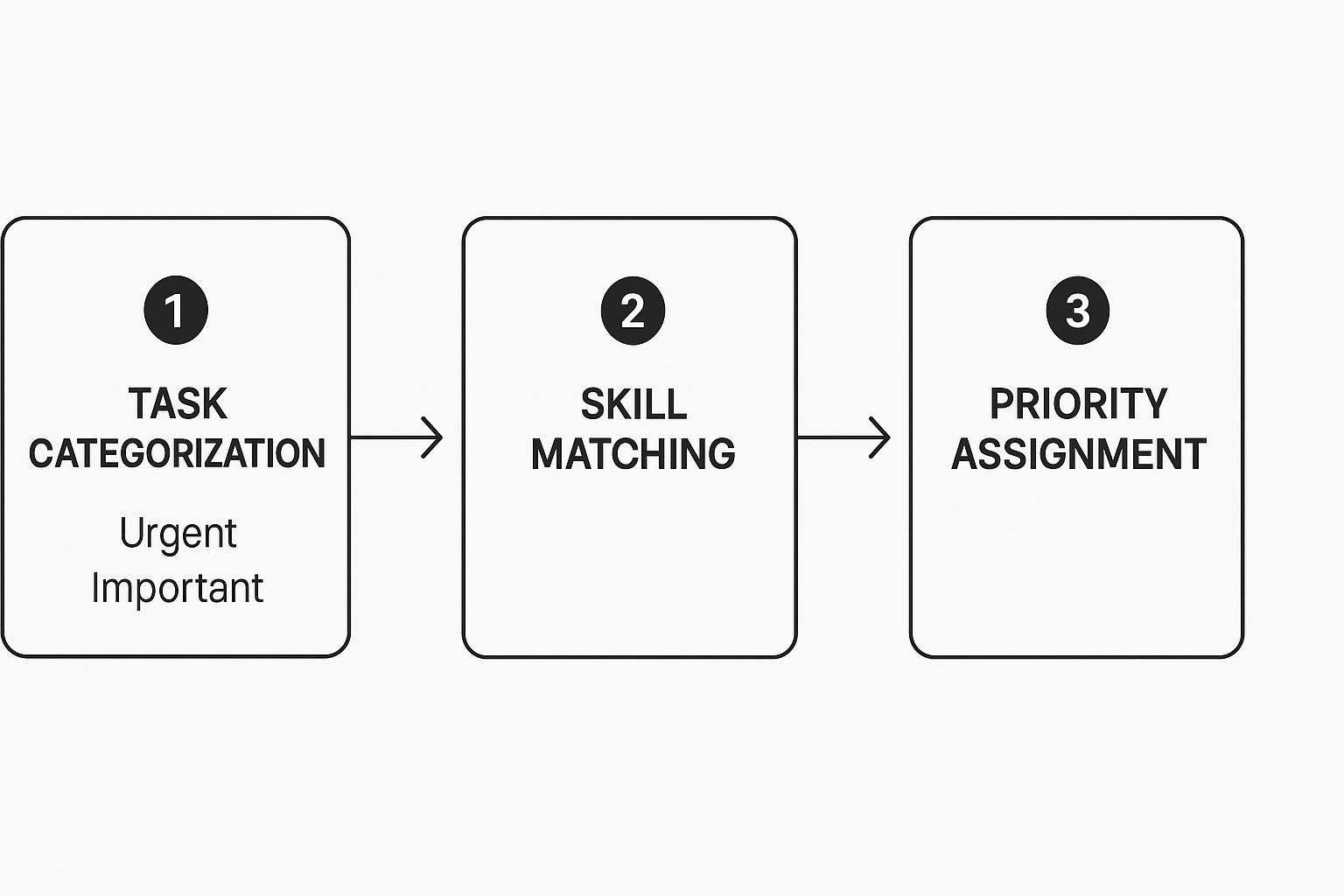
As you can see, the critical step is that thoughtful matching of skill and task. It's the bridge that ensures the work doesn't just get done, but gets done well by someone who is either ready for it or eager to grow into it.
True leadership shines when you match the task to the person, not just the job title. It signals that you're invested in their career goals, not just lightening your own workload.
Thinking this way is fundamental to building a strong, capable team. It’s a key part of your leadership style in business management and shows you're focused on seeing potential, not just plugging a hole.
How to Craft a Perfect Task Handoff

Vague instructions are the silent killer of delegation. We've all been there. You think you've explained a task perfectly, but your team member walks away with a completely different picture in their head.
That disconnect is precisely where things go off the rails. It leads to rework, missed deadlines, and that frustrating little voice in your head saying, "I should have just done it myself."
The fix is mastering the art of the perfect handoff. This isn't about micromanaging. It's about creating such undeniable clarity that your team can run with a task, confident and autonomous. When you get this right, you empower them with real responsibility and accountability, which is a huge driver of performance and morale, as a study on psychological empowerment found.
This all starts by getting past the what and digging into the why.
Define What Done Looks Like
The single most critical part of any handoff is agreeing on a crystal-clear "Definition of Done." This isn't just a due date; it’s a shared vision of what a successful outcome actually looks like.
"Get the monthly report ready" is a recipe for disaster. You need to be way more specific.
A solid Definition of Done sounds more like this: "The monthly marketing report is complete when it’s uploaded to our shared Google Drive as a PDF, all charts are updated with the latest numbers from HubSpot, and a quick summary of key takeaways is posted in the #marketing Slack channel by 5 PM on the last Friday of the month."
That level of detail removes all the guesswork. From the get-go, you and your team member are aiming for the exact same target.
A task without a clear 'Definition of Done' is just a suggestion. Defining the finish line before the race starts is the fastest way to reduce back-and-forth and eliminate frustrating rework for everyone involved.
Provide Context and Boundaries
Once the finish line is clear, you need to provide the map and the gear to get there. This is where a lot of leaders drop the ball. Just assigning a task without explaining its purpose is a huge missed opportunity to motivate and align your team.
Make sure your handoff conversation covers these key elements:
- The 'Why' Behind the Work: Connect the task to the bigger picture. For example, "We need this competitive analysis done by Thursday because it's the main data source for our Q3 strategy meeting on Friday."
- Necessary Resources: Don't make them hunt for things. Point them directly to the tools, documents, and people they'll need. This could mean software access, links to past reports, or the contact info for an expert on another team.
- Clear Authority: Tell them what they can decide on their own. Can they approve a small expense? Are they allowed to contact a partner directly? Setting these boundaries upfront prevents them from getting stuck waiting for your approval.
For tasks that happen over and over, documenting this information is a game-changer. Using a simple standard operating procedures template makes every handoff just as clear as the last. It turns delegation from a daily chore into a scalable system that truly empowers your team.
Building a Rhythm for Communication and Feedback

Once you've handed off a task, the real work actually begins. A lot of founders get this wrong. They either dump the work and disappear, which is just abandonment, or they hover and constantly check in, killing the very autonomy they were trying to create.
The trick to delegating effectively is finding that sweet spot. You need a sustainable rhythm for communication that keeps you in the loop without ever feeling like micromanagement.
This isn’t about peering over their shoulder. It's about building a predictable cadence that makes your team feel supported, not surveilled. You’re aiming for a clear feedback loop where people know they can ask for help and you get the visibility you need to sleep at night.
Setting the Right Check-In Cadence
Look, not every task is created equal, so a one-size-fits-all check-in schedule is doomed to fail. It’ll either suffocate your high-performers or leave junior team members stranded. The right cadence always depends on the task's complexity, the person's experience level, and what's at stake.
Here’s how I think about it:
- Critical, Time-Sensitive Projects: If you're up against a hard deadline for a major feature launch, a quick 10-minute daily sync isn't overkill. It's essential for clearing roadblocks fast.
- Ongoing Responsibilities: For something recurring, like the weekly company newsletter, a simple weekly update in Slack or your project management tool is perfect. It shows you trust them to own the process.
- Long-Term Strategic Initiatives: For a big, six-month project, a more formal bi-weekly check-in is great for tracking major milestones. Combine that with asynchronous updates so you don’t get bogged down in the day-to-day weeds.
The most important part? You have to agree on this cadence during the initial handoff. It sets crystal-clear expectations from day one and removes all the anxiety around when and how they should be giving you updates. It just becomes part of the workflow.
Delegation is a two-way street built on trust. A good communication rhythm gives your team a clear path to get help and gives you the peace of mind to step back and let them own the work.
Giving Feedback That Fuels Growth
When it’s time to review what’s been done, how you give feedback changes everything. Vague comments or overly critical takedowns will crush motivation and make people shy away from taking on new challenges.
Good feedback is about coaching, not just correcting. The goal is to build people up, not tear them down. To make it truly constructive, always focus your comments on the work and the process—never the person.
Here are a few pointers:
- Be Specific: Don't just say, "This isn't quite right." Instead, try something like, "The data in this report is solid, but next time, let's add a one-paragraph summary at the top so executives can get the key takeaways instantly." See the difference?
- Ask Questions: Instead of just pointing out a flaw, guide them to the solution. Ask, "I noticed the customer feedback wasn't included here. What was your thinking on that part of the brief?" This encourages critical thinking.
- Balance Praise and Pointers: Always, always start with what they did well. Acknowledging the good stuff reinforces positive habits and makes the constructive criticism much easier to hear and act on.
This simple shift turns feedback from a scary judgment into a collaborative learning moment. It builds both confidence and competence, ensuring that with every single task you delegate, your team gets stronger and more capable.
Using Systems and Automation to Scale Delegation
Handing off individual tasks is a decent start, but it won't get you very far. It's just not scalable. To really move the needle with delegation, you need to build a machine that runs itself with minimal day-to-day meddling from you. This is where systems and automation come in, transforming delegation from a manual chore into a reliable, predictable engine for getting things done.
The mindset shifts from thinking task-by-task to thinking in terms of ownership and outcomes. Instead of constantly saying, "I need you to do this," the new dynamic becomes, "You are responsible for this result." The bedrock of this shift? Simple, crystal-clear role scorecards.
Create Role Scorecards for Clear Ownership
Forget those dusty, multi-page job descriptions nobody reads. A role scorecard is a lean, one-page document. It simply outlines the three to five core responsibilities for a role and the key metrics that prove success is happening. It becomes the ultimate source of truth for who owns what.
Let's imagine a scorecard for a SaaS customer success manager. It might look something like this:
- Responsibility: Own the entire onboarding experience for all new Tier 1 customers.
- Key Metric: Hit a 95% completion rate of the onboarding checklist within the first 14 days of a customer signing up.
See how that simple structure makes delegation almost automatic? When a new Tier 1 customer comes on board, there’s zero confusion about who takes the lead. It's already defined. This approach cuts through ambiguity and gives team members the confidence to take initiative in their swim lanes. It's also a huge morale booster, as it gives people more autonomy and a real sense of ownership over their work. In fact, studies show a direct link between the motivational benefits of delegation and job satisfaction.
The real goal of a scorecard is to make ownership so blindingly obvious that delegation becomes the default. It’s not about assigning work; it’s about clarifying who is already accountable for the outcome.
Automate Workflows with Project Management Tools
Once ownership is clear, the next step is to automate the handoff and tracking. This is where tools like Asana, Jira, or Trello become your best friends. You can set up templates and rules that automatically assign tasks the moment a certain trigger occurs.
For example, when a salesperson marks a deal as "Closed-Won" in your CRM, an automation can kick off a whole sequence of events without anyone lifting a finger:
- A "New Client Onboarding" project is instantly created from a pre-built template.
- The customer success manager is automatically assigned the initial kickoff task.
- The finance team gets a task to set up the new customer's billing.
A systematic approach like this ensures nothing ever falls through the cracks. It also gives you complete visibility into what’s happening without you having to constantly chase people for updates.
By combining the clear ownership from scorecards with automated workflows, you’re not just delegating—you’re building a scalable delegation machine. This is a foundational part of running an efficient operation. You can find even more opportunities by exploring how to apply SaaS automation across your business. For some inspiration, checking out some top business process automation examples can show you what’s possible.
To help you choose the right platform, here's a quick comparison of a few popular tools that SaaS teams often use to automate and track their delegated work.
Delegation Tool Comparison for SaaS Teams
| Tool | Best For | Key Delegation Feature |
|---|---|---|
| Asana | Cross-functional project management | Automated Rules that assign tasks based on project status or custom triggers. |
| Jira | Software development and technical teams | Customizable workflows that move tickets through stages and assign them to the right person automatically. |
| Trello | Visual task management and simple workflows | "Butler" automation for creating rules on cards, like assigning members when a card is moved to a specific list. |
| ClickUp | Teams wanting an all-in-one productivity hub | Powerful automations that can handle complex, multi-step handoffs between different departments. |
Ultimately, the specific tool matters less than the system you build around it. The key is to pick one, get your team on board, and start turning manual handoffs into automated workflows.
Answering the Tough Questions About Delegation
Even with a perfect plan on paper, delegation gets messy in the real world. Once you start handing off responsibilities, you're bound to run into some tricky situations. It’s completely normal to wonder what to do when things don’t go exactly as planned.
Let’s get into some of the most common hurdles I see SaaS leaders face and how to handle them.
What If the Work Isn't Up to My Standards?
This is the big one. It’s probably the number one fear that keeps founders and managers from letting go of tasks. While it's a valid concern, the answer isn't to snatch the work back and do it yourself. The real solution lies in putting more effort into the initial handoff.
A vague request is a recipe for a disappointing result.
Your best defense is a crystal-clear "Definition of Done." Be almost painfully specific. If you can, show them a great example of what "finished" looks like. Think of their first attempt not as a final product, but as a paid training session. When you review their work, give feedback that is direct, helpful, and focused on the process, not the person.
The goal isn't just getting one task done right. It's about teaching someone the system to get it right every single time. This takes patience and a coaching mindset, but the payoff in building your team's capability is enormous.
Invest the time upfront, and you’ll find your team members quickly start to anticipate your standards without needing a long checklist for every little thing.
How Do I Hand Off Work to Someone Who's Already Swamped?
Piling another task onto an already overwhelmed team member feels like you're setting them up for failure. Before you do anything, you need to find out if their plate is actually full. Sometimes a quick conversation reveals they have more bandwidth than you think.
If they are genuinely at capacity, that’s a flashing red light telling you it's time to re-evaluate priorities for the whole team. As a leader, it's your job to make sure everyone is focused on the highest-impact work.
Ask yourself a few hard questions:
- Is this new task more important than what they're doing now?
- If it is, what can we push back or take off their plate to make room?
- Could this be a growth opportunity for another person on the team?
Never just add to a full workload without taking something away—that’s a fast track to burnout and resentment. Real delegation is often about strategic subtraction, not just addition. For example, if you're delegating a task related to user retention, you might want to review different customer success strategies to pinpoint the most effective use of their limited time.
What Happens When a Team Member Makes a Mistake?
Mistakes are going to happen. It's an unavoidable part of learning and taking on new responsibilities. Your reaction in these moments is what truly shapes your company culture. The key is to see errors as coaching opportunities, not moments to place blame.
First, contain the problem. Figure out the immediate impact and do what’s necessary to fix it for the project or the customer. Once the fire is out, set aside some time to talk with your team member and calmly figure out what happened.
The goal is to find the root cause, not the culprit. Frame the conversation around the system:
- Were my initial instructions confusing?
- Were you missing a tool or a specific skill to get this done?
- Did we have a communication breakdown somewhere?
When you focus on fixing the system that allowed the mistake, you create psychological safety. People become willing to take risks and tackle new challenges because they know an honest mistake is a chance to learn, not a reason to get in trouble.
At SaaS Operations, we provide the proven playbooks and templates you need to build efficient systems for delegation, people management, and more. Stop reinventing the wheel and start scaling with frameworks from operators who have been there before. Check out our resources at https://saasoperations.com.