How to Build a High Performing Team for SaaS Growth
 Published By: Alex
December 14, 2025
Published By: Alex
December 14, 2025
Building a truly high-performing team isn't about hiring smart people and hoping for the best. The secret is engineering an environment where talented individuals feel safe enough to innovate and are all pulling in the same direction.
It starts with two non-negotiable elements: psychological safety, where failures are treated as data, and crystal-clear goals, which give everyone a shared mission.
Build a Foundation of Psychological Safety and Clear Goals
Before you write a single job description or define a KPI, you must get the human element right. The engine of any elite SaaS team runs on two core fuels: a deep sense of psychological safety and an unwavering focus on specific, shared goals.
Without these, even the most brilliant people will work in silos, too scared to take the risks that lead to breakthrough growth. This isn't theory; it's operational reality.
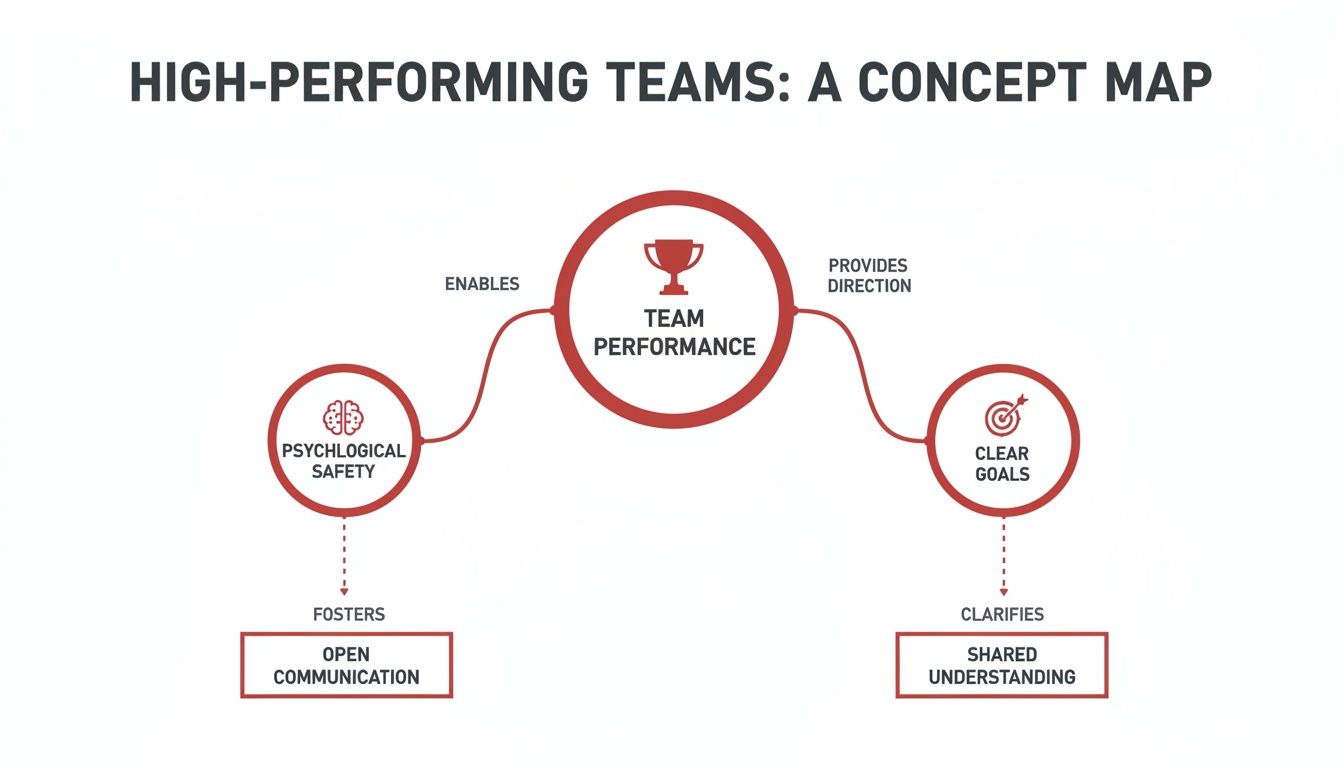
As you can see, top-tier performance isn't just raw output. It’s the direct result of a culture where people feel secure enough to give their all and smart enough to know exactly where to point their efforts.
The Power of Psychological Safety
Psychological safety isn't about being "nice." In the fast-paced SaaS world, it’s the bedrock of agility and innovation. It's the shared belief that you won't be punished or humiliated for speaking up with ideas, questions, concerns, or—most importantly—mistakes.
This is backed by hard data. Google's Project Aristotle analyzed 180 teams and found psychological safety was the number one predictor of success. Teams that nailed this saw 19% higher productivity and 27% lower turnover. That’s a massive competitive edge.
Actionable Playbook: As a leader, your job is to model this behavior. When a feature launch flops, say it out loud in a team meeting: "That was a misstep on my part. Here’s what I learned, and here's how we'll pivot." This simple act of vulnerability gives your team permission to do the same, turning failures into valuable data instead of something to hide.
Practical Ways to Foster Safety
- Run inclusive meetings. Don't just let the loudest person talk. Start meetings by asking for input from quieter team members first. Your exact script: "Sarah, you've been deep in this data. What's your take before we open it up?" This signals that every perspective matters.
- Frame work as a learning problem. Instead of saying, "We have to hit this target," reframe it: "We have an ambitious goal, and we're not 100% sure how to get there. What are three experiments we could run next week to find out?" This invites ideas, not just pressure.
- Admit you don't know everything. One of the most powerful things a leader can say is, "I'm not sure, what does everyone else think?" It builds trust instantly by replacing authority with collaboration.
High-Performing vs. Underperforming Team Dynamics
The difference between a high-performing team and an underperforming one often comes down to these subtle, daily interactions. It's not about talent alone; it's about the operational environment. Here’s a quick look at what separates the best from the rest.
| Characteristic | High-Performing Team Behavior | Underperforming Team Behavior |
|---|---|---|
| Feedback | Open, constructive, and sought after by everyone. | Avoided, taken personally, or only delivered top-down. |
| Mistakes | Viewed as learning opportunities and discussed openly. | Blamed on individuals, hidden, or ignored. |
| Communication | Proactive, transparent, and multi-directional. | Reactive, siloed, and primarily top-down. |
| Decision-Making | Collaborative, data-informed, and focused on team goals. | Driven by a few dominant voices or based on gut feelings. |
| Conflict | Handled respectfully as a way to find the best solution. | Becomes personal, creates resentment, and is often unresolved. |
Seeing these dynamics in action makes it obvious why psychological safety isn't a "nice-to-have." It's a core operational advantage.
From Vague Wishes to Precise Goals
Once your team feels safe to contribute, you must give them a clear target. A fuzzy goal like "increase revenue" is useless because no one knows what they’re supposed to do. Elite teams run on precise, measurable objectives that tie individual work directly to the company's mission.
SaaS Operator Example: I worked with a B2B SaaS go-to-market team whose goal was to "grow the pipeline." It was chaos. Sales blamed marketing for bad leads, and marketing blamed sales for not closing them. Leadership stepped in and set a single, clear objective using the OKR framework. The new Objective: Dominate the mid-market manufacturing segment. The Key Result: Generate 150 Sales-Qualified Opportunities (SQOs) from that segment this quarter.
Everything changed overnight. Marketing knew their exact target. Sales knew what to expect. This kind of alignment is a cornerstone of effective business leadership. They built a shared playbook, and within six months, they blew past their goal by 20%.
For a deeper dive, check out this a complete modern guide on how to build high performance teams. It’s all about turning those big ambitions into daily tasks that everyone on the team understands and can execute.
The SaaS Operator's Playbook for Hiring A-Players
You don't just find high-performing teams; you build them. Meticulously. And it all starts with who you let through the door. This isn't about gut feelings or "culture fit." It's about running a disciplined, scorecard-based process that weeds out everyone but the true A-players.
Forget scanning résumés for a minute. Your mission is to uncover core traits: deep-seated ownership, a high degree of coachability, and a bias for action. Everything else is secondary.
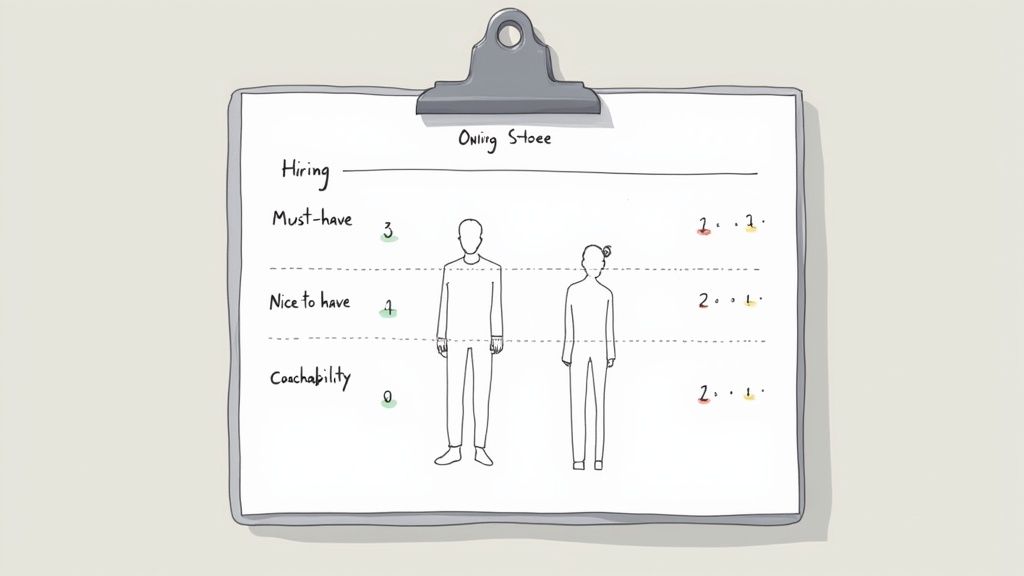
Ditch "Culture Fit" for a Hiring Scorecard
"Culture fit" is a lazy excuse to hire people who think and act just like you—a one-way ticket to a stagnant team. A much smarter way to operate is with a hiring scorecard.
This is a document you create before posting the job. It outlines the must-have outcomes, skills, and values for the role. It forces you to get crystal clear on what success looks like, and then you grade every candidate against the exact same yardstick. This eliminates unconscious bias and keeps interviews focused on what drives performance.
SaaS Operator Example: A B2B SaaS founder switched to a scorecard system that rated candidates on three core values: extreme ownership, customer obsession, and intellectual curiosity. It completely transformed their interviews from casual chats into targeted assessments. Their hiring success rate (hires who became top performers within 12 months) jumped from 50% to over 85%.
Field-Tested Questions That Reveal True Character
Standard interview questions get you polished, rehearsed answers. Use questions that force candidates to show you how they really operate when things get tough.
Here are proven questions to add to your playbook:
- To test ownership: "Tell me about a time a project you were on went completely off the rails. What was your specific role in the failure, and what did you do about it?" Look for people who take direct responsibility ("I should have double-checked the data"), not those who blame broken processes or other teams.
- To test coachability: "Walk me through a piece of critical feedback you received that was hard to hear. How did you react in the moment, and what specific action did you take as a result?" A-players are hungry for feedback; they can point to specific things they've changed.
- To test bias for action: "Describe a situation where you had to make a decision with incomplete information. What was your process, and what was the outcome?" This question instantly separates the doers from those who get stuck in analysis paralysis.
Master the Critical First 90 Days
Landing an A-player is only half the battle. A rock-solid onboarding plan is what turns that promising new person into a fully integrated, productive team member. The first 90 days are about engineering early wins and building their confidence.
A thoughtful onboarding experience is your best lever to figure out how to reduce employee turnover before it becomes a problem.
A 30-60-90 Day Onboarding Framework
Break the onboarding journey into clear phases with specific goals. This gives both the new hire and their manager a roadmap for success.
- Days 1-30: Focus on Learning and Integration. Immersion is the only goal. They should be meeting key people, understanding the company mission, and learning core tools. Assign a "buddy"—someone they can ask the "stupid" questions. Their first win should be something small and low-risk that they can complete successfully.
- Days 31-60: Focus on Contribution. Take off the training wheels. They should begin owning smaller projects, actively contributing in team meetings, and pointing out areas for improvement. The 60-day check-in is critical for giving direct feedback and making any course corrections.
- Days 61-90: Focus on Ownership. By the end of month three, your new hire should be flying solo. They should own a significant area of responsibility and be a key contributor to the team's goals. The 90-day review is a strategic chat about their progress and what's next.
SaaS Operator Example: One operator cut their new sales hire ramp-up time from six months down to three. His playbook? He combined this 30-60-90 plan with a mentorship program where every new rep was paired with a top performer for their first month. This ensures every A-player has the support needed to start delivering value, fast.
Install a Team Operating System That Drives Execution
You can have a roster full of A-players, but without a clear system, you just get well-intentioned chaos. A truly high-performing team runs on a crisp, efficient operating system—one that turns individual talent into predictable, repeatable results.
This isn't about bureaucracy. It’s about simple, repeatable processes that remove friction and free up your team’s brainpower for high-impact work. When you install this "OS," you give your team the structure they need to execute consistently.
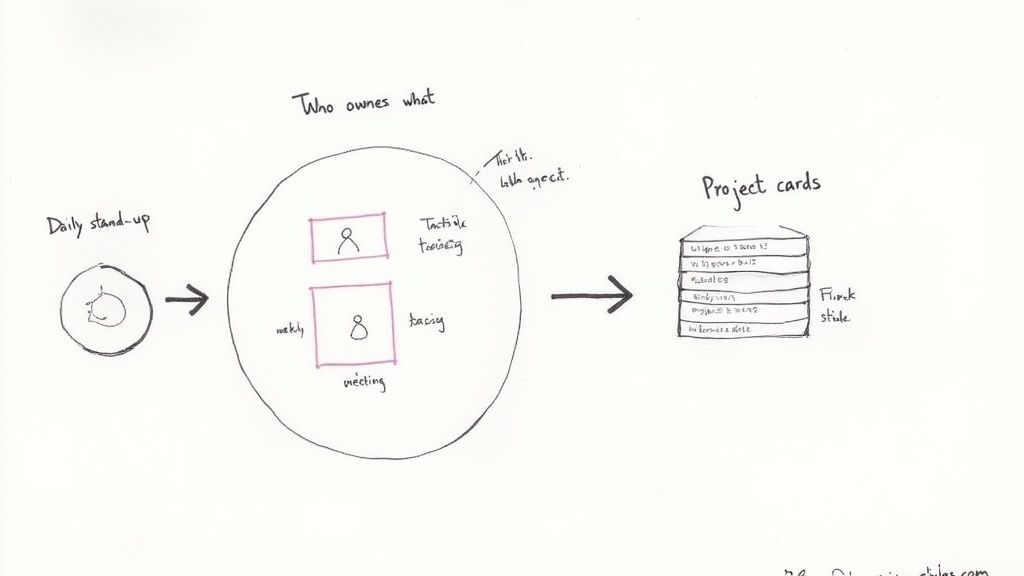
Establish a Communication Cadence That Works
Random check-ins and endless, unstructured Slack threads are where productivity goes to die. The best teams run on a deliberate communication cadence. This isn't about more meetings; it's about better, more focused interactions.
A Dale Carnegie study found that 81% of high-performing teams interact daily. What makes that interaction work? The study also found that 85% have well-defined goals, giving those daily touchpoints direction.
Your meeting rhythm should nail these key events:
- Daily Stand-ups (The Right Way): Keep these to 15 minutes, tops. The goal is to unblock work for the team, not a status report for the boss. Everyone answers two simple questions: "What are my priorities today?" and "What roadblocks are in my way?"
- Weekly Tactical Meetings: This is a 60-minute session to review progress against your goals, tackle roadblocks, and align on the week ahead. It keeps everyone pulling in the same direction.
SaaS Operator Example: A startup's entire execution model transformed after they implemented a weekly meeting focused on two things: "Wins & Roadblocks." Celebrating wins built momentum, while tackling roadblocks as a team solved problems exponentially faster.
Use a Battle-Tested Weekly Meeting Agenda
Don't reinvent the wheel. A structured agenda is your best defense against meetings that wander off-track. Steal and adapt this template for your team.
| Section | Time Allotted | Purpose |
|---|---|---|
| Good News | 5 minutes | Start on a positive note. Quick personal or professional wins build connection. |
| Scorecard Review | 5 minutes | A quick Red/Yellow/Green review of the 5-7 most important weekly KPIs. |
| Rock Review | 10 minutes | Check progress on the team's 90-day priorities (Rocks). Are they on or off track? |
| Headlines | 5 minutes | Quick updates from team members about key customer or employee news. No discussion. |
| Issues List | 30 minutes | The core of the meeting. Tackle the most important roadblocks and make clear decisions. |
| Recap | 5 minutes | Quickly review decisions made and action items. Who owns what, by when? |
This structure forces discipline. It ensures you spend the bulk of your time solving problems, not just talking about them.
Implement Lightweight Project Management SOPs
Clarity is kindness. Your team needs to know exactly who owns what and by when. This is where lightweight Standard Operating Procedures (SOPs) come in, powered by tools like Asana, Monday.com, or Notion.
You don't need a clunky system. Start with a simple SOP for how projects are created, assigned, and tracked.
Your project management SOP must clearly define:
- The Single Source of Truth: Where does all project-related info live? Pick one tool and mandate its use.
- Task Ownership: Every single task must have one, clear owner. No ambiguity.
- Due Dates: Every task needs a realistic due date.
- Status Updates: Define how updates are communicated (e.g., comments within the task, not random Slack DMs).
To build a truly robust system, consider integrating these 10 best practices for performance management. Creating this operational backbone allows your A-players to focus on doing their best work.
Fuel Performance with Recognition and Real Development
You've hired A-players and installed an operating system. Now you must keep the engine running hot. This is where motivation, recognition, and genuine growth come into play. High performance isn't a one-time achievement; it's a habit you build by creating an environment where people feel seen, valued, and invested in.
Forget the once-a-year bonus. The recognition that lands is specific, timely, and tied directly to your company's values. It’s the difference between "Thanks for your hard work" and "Sarah, the way you handled that tough customer call with empathy and found a creative solution perfectly embodies our 'customer obsession' value. Thank you." The second one makes a real impact.
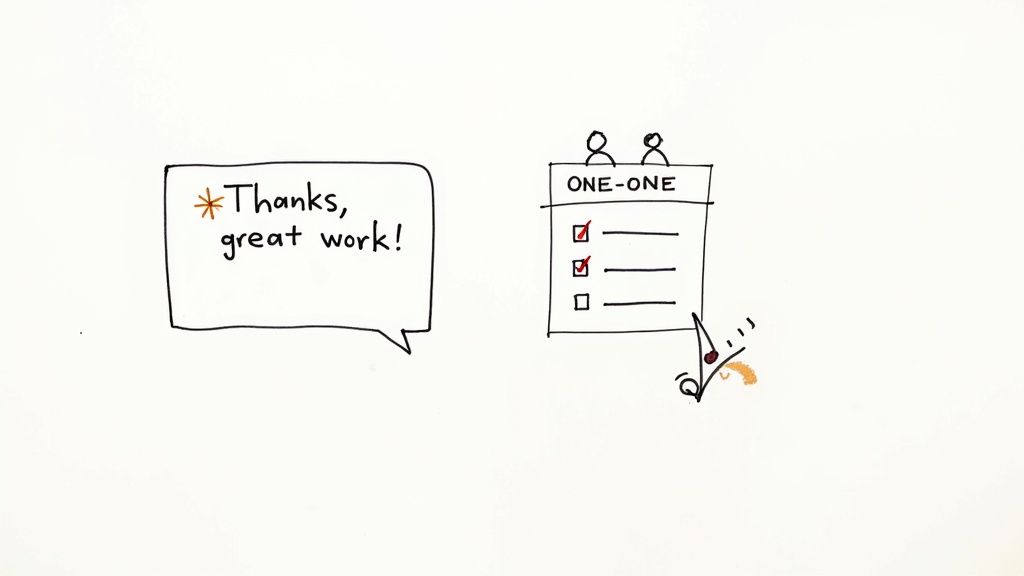
Make Recognition a Daily Habit, Not an Annual Event
Bake recognition into your daily culture. The goal is to create a constant feedback loop where awesome contributions get reinforced immediately.
The easiest, lowest-cost way to do this is with a dedicated public Slack channel, like #wins or #shoutouts. Get everyone involved, from the CEO down, posting specific call-outs. Once a peer-to-peer recognition system catches on, it becomes a powerful, self-sustaining engine for morale.
The data is clear. A Gallup meta-analysis found that the most engaged teams are 23% more profitable and see 18% higher productivity in sales. The magic ingredients? Frequent recognition and continuous development—the very things that turn an average team into a force of nature.
Move Beyond Status Updates in Your 1-on-1s
Your weekly 1-on-1s are your single most important development tool. If you’re just using them for status updates, you're blowing a massive opportunity. A high-impact 1-on-1 is driven by the team member, not the manager, and focuses squarely on their growth and challenges.
Structure these conversations to go deeper:
- What are you most proud of from last week? This kicks things off with a win.
- What roadblocks are you hitting, and how can I help clear them? This frames you as a problem-solver, not a taskmaster.
- What’s one thing you’d like to learn or get better at this quarter? This is a direct line into coaching.
- Is your current work energizing you or draining you? This is an early warning system for burnout.
These conversations lay the groundwork for effective development plans. You can find thought-starters to adapt in our collection of performance review templates, which can also inspire your 1-on-1 discussions.
Here are a few actionable ideas that don't break the bank.
| Actionable Recognition & Development Ideas |
|---|
| Initiative |
| Peer "Props" Channel |
| "Learn Something" Stipend |
| Lunch & Learns |
| Strengths-Based Projects |
These small, consistent efforts compound over time, creating a much stronger and more engaged team than a single, expensive annual offsite ever could.
Build a Culture of Strengths-Based Development
Trying to fix someone's weaknesses is a losing battle. The best SaaS operators amplify their team's natural talents instead. When you help people align their day-to-day work with what they're already good at and enjoy, you unlock powerful motivation and discretionary effort.
This means you’re actively looking for chances to delegate projects that play to an individual's strengths. Have an engineer who’s a surprisingly good communicator? Ask them to lead a technical demo for a key prospect. Is your marketing manager a secret data wizard? Give them ownership of the analytics dashboard.
This approach is a win-win. The company gets a better result because someone is working in their zone of genius, and the employee feels more engaged and valued. It’s a simple but profound shift that separates good managers from great leaders.
Spot and Fix Common Performance Killers
Building a high-performing team is never a clean, straight line. Even with the right people and a solid playbook, things go sideways. The mark of a great operator isn’t preventing every problem—it’s about spotting the early warning signs and stepping in before they crater your team’s morale and momentum.
Think of this as your field guide for diagnosing and fixing the most common issues that plague growing SaaS teams.
Diagnosing the Problem
High performance doesn't just vanish overnight. It erodes slowly, then seems to collapse all at once. Keep your eyes peeled for these critical shifts.
- Fuzzy Goals: If you ask three different people what the top priority is, you get three different answers. People work on conflicting projects.
- Eroding Safety: Open debate and challenging questions stop. People get quiet in meetings. You start hearing whispers of blame instead of collaborative problem-solving.
- Star Performer Complacency: Your top contributor is still hitting their numbers, but the spark is gone. They're not mentoring junior folks or pushing for new ideas. They are coasting.
These symptoms are the check-engine light for your team. Ignore them at your own peril.
The Pitfall of Accountability Theater
One of the most dangerous performance killers is "Accountability Theater." It’s a toxic environment where everyone looks incredibly busy, but no one takes true ownership of the actual results.
This is the team that's always in meetings and sending endless status updates. But the moment a key deadline is missed or a metric tanks, it's impossible to find the one person who was on the hook for that outcome. The entire focus shifts from impact to activity.
The Cure: The cure for Accountability Theater is radical clarity. Every single major initiative needs a single, named owner—the "Directly Responsible Individual" (DRI). This isn't the person who does all the work, but they are the one person ultimately accountable for the outcome.
A Toolkit for Getting Back on Track
Once you’ve spotted an issue, move fast. Here are practical, no-BS fixes for the common problems.
When goals get fuzzy:
Hit the reset button. Pull the team together for a goal-setting session. Re-engage everyone in the why behind the objectives. Use a simple framework like OKRs to make it painfully obvious how every person's daily tasks connect directly to the company's biggest priorities.
When psychological safety erodes:
As the leader, you must model vulnerability. Immediately. The next time something fails, run a blameless post-mortem. The focus must be 100% on the process, not the people. Don't ask, "Who dropped the ball?" Instead, ask, "What in our process allowed this to happen?" and "What did we learn?" This simple shift in language can start rebuilding trust instantly.
When a star performer gets complacent:
This requires a direct, but supportive, one-on-one conversation. Frame it around their growth, not your disappointment.
Use this script: "Your work on X and Y has been huge for us. Lately, I've gotten the sense you might not be as engaged, and I'm worried you aren't feeling challenged. What's next for you? Is there a big, meaty project that would get you fired up again?" This opens the door to a real conversation about their career instead of putting them on the defensive.
These crucial conversations often take place in meetings, which is why knowing how to run effective meetings is a non-negotiable skill. Fixing these performance killers comes down to consistent, intentional leadership.
Got Questions? We've Got Answers
Even with the best framework, you'll run into tricky situations. I've pulled together the most common questions I hear from other SaaS operators to give you clear, no-fluff answers.
How Can I Actually Measure Psychological Safety?
You don't need a fancy analytics tool. Use simple, anonymous pulse surveys. Ask your team to rate a few statements on a 1-5 scale:
- "I feel comfortable bringing up tough issues or problems with this team."
- "It's safe to take a calculated risk on this team."
- "When someone messes up, we don't hold it against them."
Track the average score over time to see trends. But the data is only half the story. Pay attention to your meetings. Who's talking? Are people asking questions? When a mistake happens, is the first instinct to point fingers or to learn? That blend of data and real-world observation gives you the full picture.
What's the Real Difference Between a "Good" Team and a "High-Performing" One?
A good team gets the job done. They hit their targets and deliver on time. They're reliable.
A high-performing team, on the other hand, consistently blows expectations out of the water. The difference? Proactivity, deep ownership, and an obsession with getting better. They don't just put out fires; they look ahead to prevent them. They hold each other to an incredibly high standard—it doesn't just come from the manager.
High-performing teams generate their own energy. Their collective impact is greater than the sum of their individual contributions because they constantly push each other to find smarter, faster, better ways to work.
My Team Is Fully Remote. Does This Stuff Still Apply?
Absolutely. In fact, these principles are even more critical for remote teams because you have to be more intentional. You can't rely on office osmosis.
- Psychological Safety: Build it deliberately. Encourage questions in public Slack channels so everyone benefits from the answer. As a leader, you have to be more open about your own struggles and mistakes.
- Communication Rhythms: These need to be rock-solid. That means tight daily check-ins, crystal-clear documentation in a tool like Notion, and scheduling virtual hangouts that have nothing to do with work.
- Recognition: It's easy for great work to go unnoticed when everyone's remote. Public shout-outs and peer recognition programs aren't just nice-to-haves; they're essential for keeping your team engaged.
How Long Will This Take? Give It to Me Straight.
There's no magic wand. This is a marathon, not a sprint. You can see real improvements in communication and focus within the first 90 days once you install clear goals and meeting cadences.
But to build deep trust and a true culture of accountability? You’re looking at 6-12 months of consistent effort. Treat this as a continuous process, not a project with an end date. You bake these principles into how you hire, promote, and act every day. That's what creates a team that performs at a high level for the long haul.
At SaaS Operations, we give you the battle-tested playbooks, templates, and SOPs to install the operating system your team needs to thrive. Stop reinventing the wheel and start accelerating your growth with our plug-and-play frameworks. Learn more at https://saasoperations.com.