
Think of it this way: a strategic plan is your company’s North Star. It answers the big ‘what’ and ‘why’ questions. It’s the high-level decision to, say, become the market leader in a new enterprise vertical over the next five years.
An operational plan, on the other hand, is the detailed roadmap that gets you there. It’s all about the ‘how,’ ‘who,’ and ‘when’—the practical steps your teams will take every day, week, and month to make that vision a reality.
Connecting Vision to Daily Action

While they feel different, strategic and operational plans aren’t separate ideas you choose between. They’re two sides of the same coin, both absolutely essential for any SaaS company that wants to grow and last. Your strategy sets the destination, giving purpose to every action. Without it, you could be incredibly efficient at doing all the wrong things.
On the flip side, operational excellence is what actually produces results. A solid operational plan takes those big, ambitious strategic goals and breaks them down into a clear, actionable roadmap for your teams. It defines the day-to-day and week-to-week activities, assigning specific priorities and deadlines.
A brilliant strategy is just a dream without disciplined execution, and flawless execution is wasted effort without a clear direction. The magic happens when you build a strong bridge between the two.
This is how you get every department—from marketing and sales to product and engineering—pulling in the same direction. This alignment is critical. It closes the gap where daily tasks can feel disconnected from the company’s bigger mission, turning abstract goals into tangible, measurable progress.
To make these differences crystal clear, let’s break them down side-by-side.
Quick Comparison: Strategic vs. Operational Plans
This table offers a quick snapshot of how these two types of plans differ in practice.
| Attribute | Strategic Plan | Operational Plan |
|---|---|---|
| Time Horizon | Long-term (3-5+ years) | Short-term (Quarterly, Annually) |
| Scope | Broad, company-wide | Narrow, department or team-specific |
| Focus | “What” & “Why” (Goals, vision) | “How” & “Who” (Tasks, processes) |
| Led By | Senior leadership (C-Suite) | Department heads, team managers |
| Flexibility | High-level, adaptable to market shifts | Detailed, focused on precision |
| Output | Vision, mission, high-level objectives | Budgets, work plans, schedules, KPIs |
As you can see, one sets the course while the other handles the day-to-day navigation. Both are needed to get where you want to go.
Comparing the Core Attributes of Each Plan
To really get a handle on strategic versus operational plans, you have to go deeper than just simple definitions. It’s about looking at their core DNA—the characteristics that dictate how they actually work inside a business, who’s in charge of them, and what they’re meant to accomplish. The biggest difference, right off the bat, is their timeline and scope.
Strategic plans are the long game. They’re built to look out three to five years, sometimes even longer. Think of them as broad, directional roadmaps that focus on huge, company-wide goals, like breaking into a new international market or becoming the undisputed leader in your current space. This is the C-suite’s territory; they own this high-level vision.
On the flip side, operational plans are all about the here and now. They are short-term and tactical, zeroing in on goals for the next quarter or year. Their scope is tight and specific, detailing the daily tasks and actions required from individual teams or departments. This is where team managers and department heads live, creating and executing these precise blueprints.
Focus and Flexibility
Another way they diverge is in their focus. A strategic plan is all about hitting ambitious, often qualitative, goals. It answers the “what” and the “why.” Since it’s dealing with a future that’s anything but certain, it has to be flexible enough to roll with the punches, whether that’s a sudden market shift or a new competitor.
Operational plans, however, thrive on precision and consistency. They are laser-focused on the “how,” “who,” and “when”—the nitty-gritty processes, workflows, and resources needed to make the big strategy happen. Here, efficiency and predictability are king.
A strategic plan is built for adaptability, allowing a company to pivot in response to a changing market. An operational plan is built for precision, ensuring day-to-day tasks are executed flawlessly to meet immediate targets.
This infographic does a great job of breaking down these core differences visually.
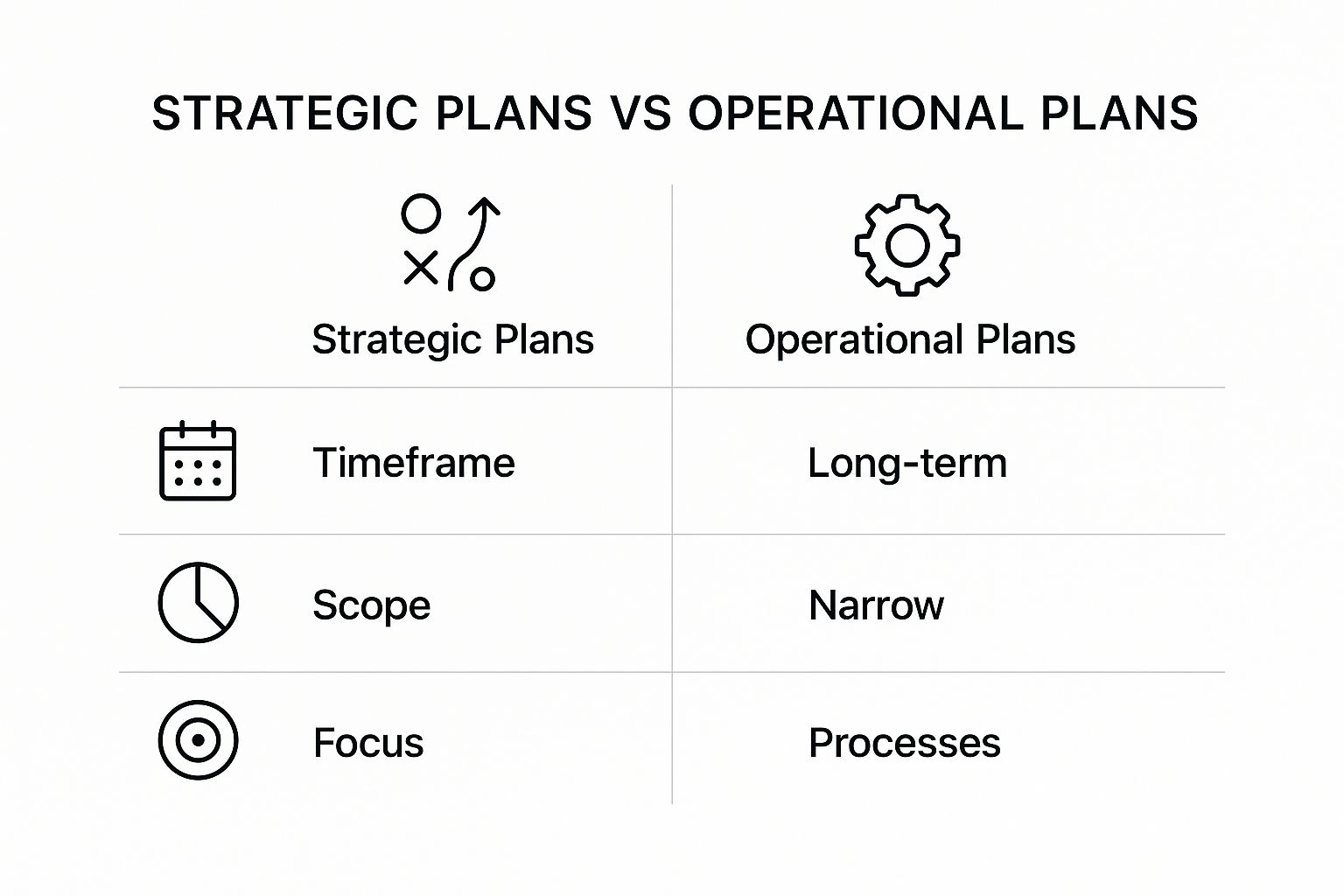
As you can see, the strategic plan is about the big picture and the long haul, while the operational plan manages the specific, short-term actions.
Leadership and Resource Allocation
The last major point of contrast is leadership and how resources are managed. Strategic planning flows from the top down. Executives make the big calls about the company’s future and decide where to place the major financial bets. The growing emphasis on getting this right is clear; the global Strategic Planning Software market was valued at USD 1.5 billion in 2023 and is expected to hit USD 5.5 billion by 2030. That’s a huge jump, showing just how critical this function has become.
Operational planning, in contrast, tends to be a bottom-up or middle-out affair. Department heads take the high-level strategic goals and translate them into concrete action plans. They’re the ones managing the budgets, people, and daily schedules to hit specific KPIs. Our guide on operational vs strategic planning digs deeper into this dynamic. This is where the visionary goals from the boardroom get turned into real, tangible work on the ground.
How External Markets Shape Your Strategy
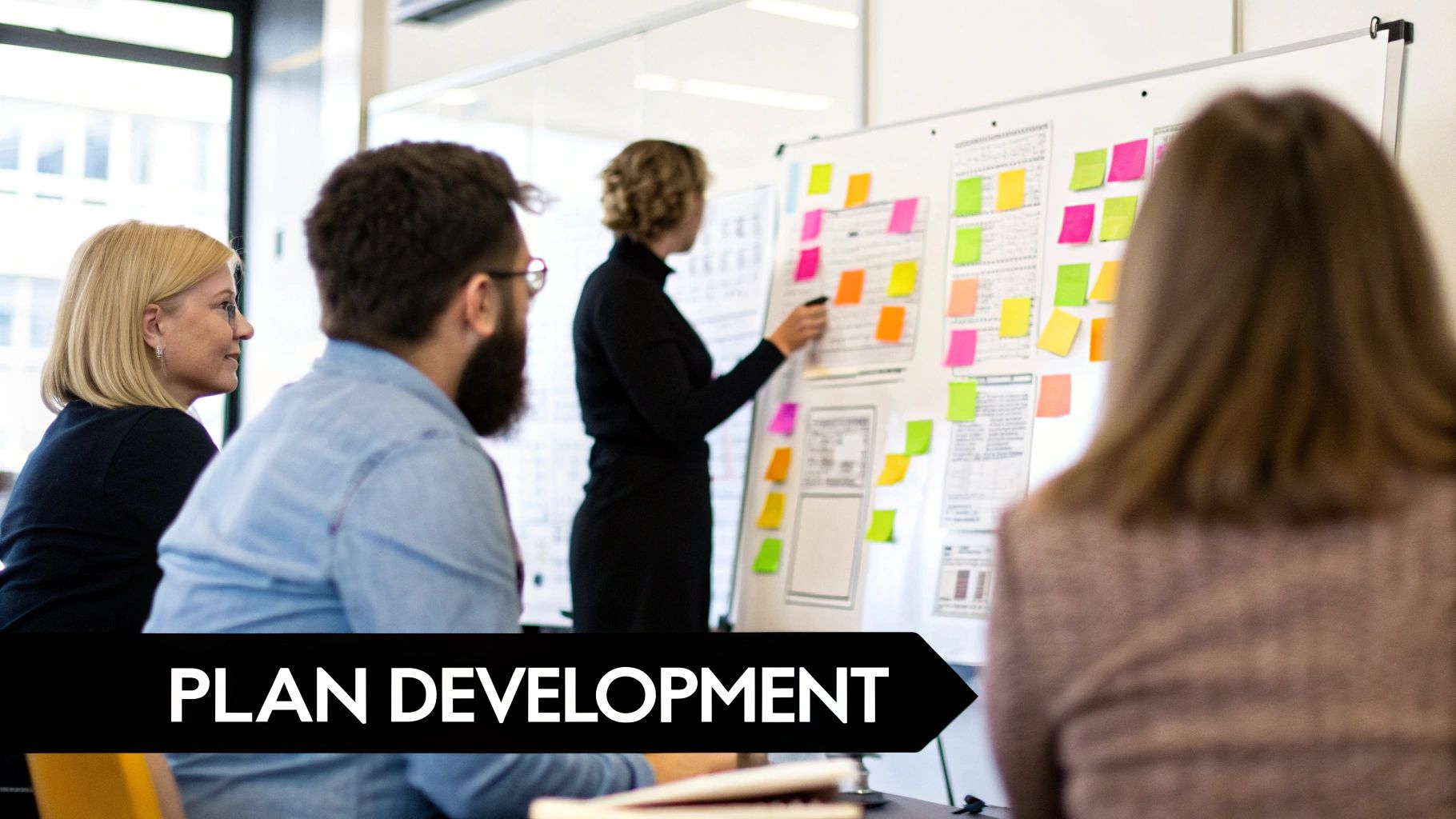
A great strategy isn’t dreamed up in a boardroom vacuum. It’s a direct response to the world outside your office walls. This means leaders have to adopt an outside-in thinking mindset, constantly scanning the horizon for both golden opportunities and incoming storms. This is one of the clearest ways to see the difference between strategic and operational planning.
A strategic plan is almost entirely shaped by external market forces. These are the big, often uncontrollable, factors that define the entire playground you’re in.
- Competitive Intelligence: What are your competitors shipping? Where are they pouring their money? A smart strategy uses this intel to find and defend a unique spot in the market.
- Economic Forecasts: Is the economy booming or bracing for a downturn? The answer dictates whether you hit the gas on growth or focus on running a lean, efficient operation.
- Disruptive Technologies: The rise of something like AI can completely rewrite the rules of the game. A solid strategy sees these shifts coming and figures out how to either pivot or pounce.
At its core, a strategic plan is a series of educated bets on where the market is going. Leaders use this external data to make calculated moves on big-picture goals like innovation, new market entry, and long-term growth.
Internal Realities Drive Operational Focus
In sharp contrast, an operational plan is born from your internal realities. While strategy looks out the window, operations looks in the mirror, focusing on the resources, people, and processes you have right now.
The main drivers here are much more immediate and tangible:
- Budget Constraints: What’s the marketing team’s budget this quarter? That number sets the hard limit on the campaigns they can run.
- Team Capacity: How many developers are free for the next two sprints? That directly controls your feature release timeline.
- Existing Workflows: How does a lead actually move through your sales pipeline today? Operational plans are all about tweaking and refining these systems for peak efficiency.
This internal focus is why operational management is all about execution and optimization. The aim is to get the absolute most out of what you’ve got to hit your short-term targets.
A strategic leader’s job is to interpret the external market to decide which mountain to climb. An operational manager’s job is to equip the team and plot the most efficient path up that specific mountain.
The strength of your long-term vision really hinges on how well you gather and analyze what’s happening outside. Integrating global market insights helps align your entire company—from marketing to R&D to sales—so everyone is pulling in the same direction, backed by solid evidence.
Ultimately, these two viewpoints are two sides of the same coin. The strategic plan sets an ambitious direction based on market opportunities. The operational plan then connects that ambition to the day-to-day reality of your resources and performance metrics. To get a better handle on which numbers to watch, you can explore our guide on essential SaaS KPIs. This constant back-and-forth ensures your goals are both inspiring and, most importantly, achievable.
Applying These Plans in a SaaS Business
The real difference between strategic and operational plans snaps into focus when you see them in action within a real SaaS company. The theories are one thing, but watching these concepts drive day-to-day work is where the magic happens.
Let’s walk through a common scenario. Imagine a B2B SaaS company sets a big, ambitious goal: to capture 15% of the small business market within two years. This is a perfect example of a strategic objective. It’s long-term, defines a clear direction, and answers the big-picture “what” and “why.”
Cascading Strategy into Action
Now, that high-level vision needs to become something teams can actually work on. This is where operational plans come into play, translating the grand ambition into concrete, measurable tasks for each department.
For the Product Team, the operational plan is their feature roadmap, broken down by quarter.
- Q1-Q2: Their focus is on building and releasing a new “lite” pricing tier. This plan would detail the specific two-week sprints needed to create features tailored to small businesses, like a simplified onboarding flow.
- Q3: The next step is launching an integration with a popular accounting software that small businesses rely on. This means allocating engineering time and setting firm project deadlines.
- Q4: They’ll shift to gathering feedback from these new users to pinpoint the top three feature requests that will guide next year’s development.
This roadmap gives the product team a clear set of tasks, ensuring every line of code they write helps achieve that larger strategic goal.
A strategic goal provides the destination, but the operational plan is the turn-by-turn navigation that gets each department there. It connects the “why” to the “how.”
At the same time, the Marketing Team is creating its own operational plan to attract and sign up this new audience.
- Quarterly Goal: Generate 1,000 marketing-qualified leads (MQLs) from small businesses.
- Actions: They’ll run targeted ad campaigns on platforms where small business owners spend their time. They will also build a content calendar filled with blog posts and webinars that solve their specific problems and tweak landing pages to boost conversions.
Every action is measurable and has a clear owner, all working on a short-term timeline. While the product team builds the right solution, the marketing team builds the pipeline that feeds it.
This interlocking approach makes sure every sprint, campaign, and new hire aligns with the company’s strategic vision. Getting this right takes serious coordination. For a detailed guide on rolling out new initiatives smoothly, our SaaS implementation checklist offers a great framework. By connecting daily work to long-term goals, you transform a bold vision into real, measurable growth.
How to Align Strategy with Daily Operations
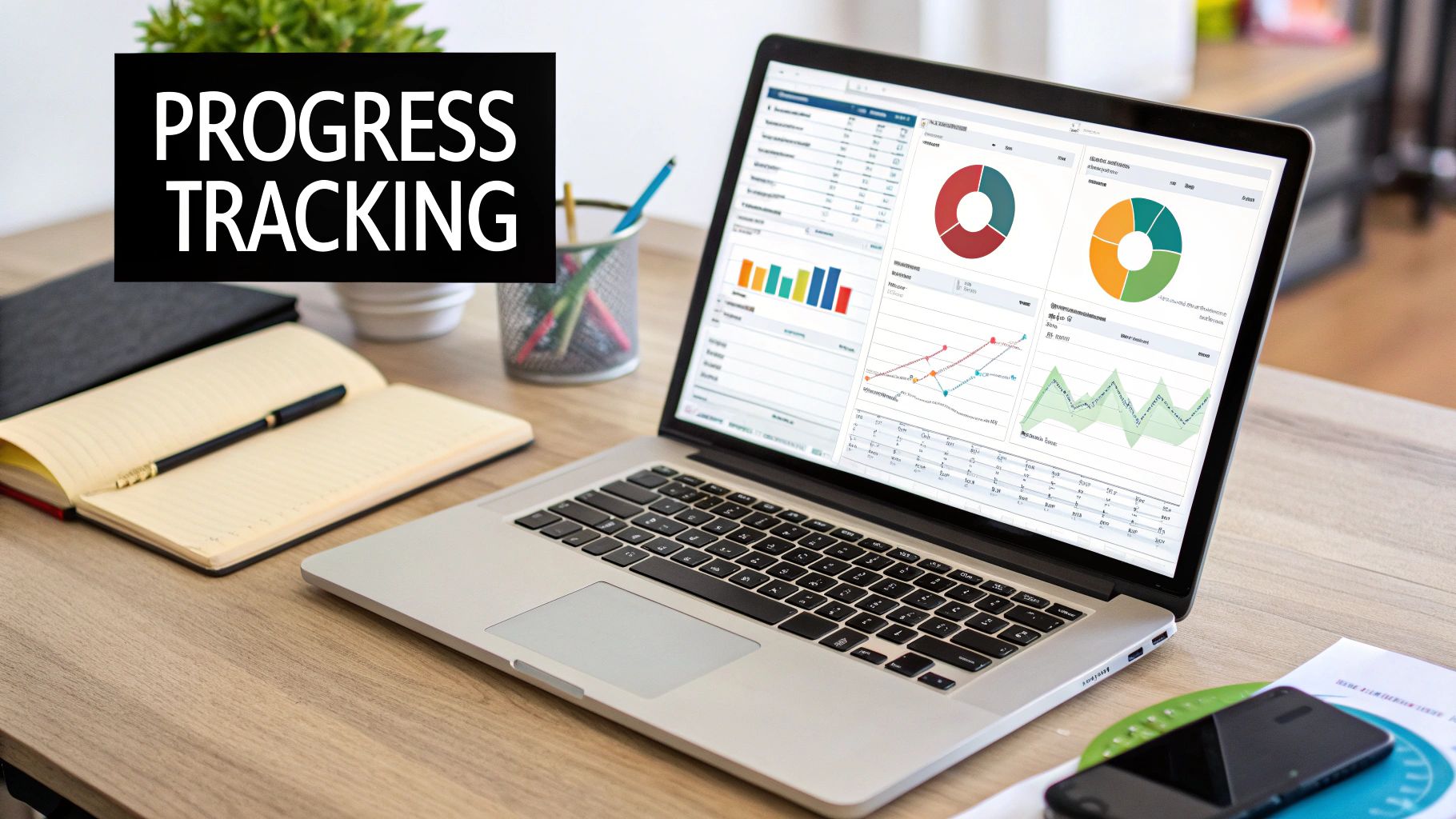
A brilliant strategy is just a nice idea if no one can execute it. On the flip side, flawless execution is wasted energy if it’s not pointed in the right direction. True, sustainable growth happens when you finally bridge the gap between your high-level vision and the nitty-gritty tasks your teams handle every day. It’s all about creating a continuous feedback loop between strategy and operations.
This connection isn’t a one-way street where strategy just dictates orders from on high. It’s much smarter than that. The data your daily operations kick out—customer support tickets, user engagement metrics, sales velocity—should constantly flow back up to inform and sharpen your strategic plan. For instance, a sudden spike in support requests for a specific feature isn’t just an operational headache; it’s a valuable strategic insight.
Translating Vision into Measurable Actions
The best way to connect strategic vs operational plans is to translate your big-picture goals into measurable operational Key Performance Indicators (KPIs). This is where abstract objectives become tangible and actionable for everyone. A vague goal like “improve customer satisfaction” suddenly becomes a concrete operational target to “reduce average ticket response time to under two hours.”
This translation process makes it crystal clear how each department contributes. It shows people how the daily grind connects to where the company is headed, which helps avoid that all-too-common feeling that individual work doesn’t really matter.
True alignment occurs when strategic goals are not just communicated but are actively measured through operational KPIs. This turns your vision from a mission statement on a wall into a living guide for daily decision-making.
For this to work, you need an honest look at where your operations are today versus where your strategy says they need to be. You can learn more about how to pinpoint these areas for improvement by exploring our guide on how to perform a gap analysis.
The Power of an Operational Feedback Loop
When you establish this feedback loop, your entire organization starts acting like a responsive, intelligent system. Operational data flowing back to leadership gives them the power to make smarter strategic pivots based on real-world evidence, not just assumptions. This is exactly why disciplined operational planning has become so important.
The global Operations Advisory market, which is all about fine-tuning these day-to-day business processes, was valued at a massive $286.23 billion in 2024. It’s even projected to grow to $351.14 billion by 2029. This explosive growth shows just how much value companies see in optimizing their daily execution to hit strategic targets. By building this bridge in your own company, you ensure everyone is pulling in the same direction, turning your ambitions into results you can actually see and predict.
Common Planning Mistakes to Avoid
Even the most carefully crafted plans can go sideways. Knowing the difference between a strategic and an operational plan is the first step, but sidestepping the common traps that sink them is what really matters. The most common mistake I see? Creating a strategic plan in a vacuum.
When leadership cooks up a high-level strategy without talking to the teams who have to actually build it, the plan is often doomed from the start. Your engineers, marketers, and sales reps are the ones in the trenches—they know what’s truly possible. Leaving them out of the conversation creates a massive disconnect right out of the gate.
Letting the Urgent Overwhelm the Important
Another classic blunder is letting urgent, day-to-day tasks constantly push aside important strategic work. It’s all too easy for teams to get stuck putting out fires, and suddenly, those big-picture projects are perpetually on the back burner. This builds up a kind of “strategic debt,” where the company gets stuck and never really innovates beyond what it’s doing today.
The key is to build a firewall between these two modes of work.
- Set aside dedicated time for strategy. This needs to be protected time. It could be a quarterly offsite or a monthly leadership meeting where operational talk is strictly off-limits.
- Use clear frameworks to connect the dots. Tools like Objectives and Key Results (OKRs) are fantastic for this. They create a clear, visible line from a high-level strategic goal right down to the weekly tasks on an operational plan.
One of the most damaging mistakes is creating a beautiful strategic plan that has no connection to the daily realities of the business. It becomes a document that gathers dust while teams operate on their own assumptions.
Aligning your grand vision with daily execution isn’t a one-and-done task; it’s an ongoing effort. For instance, a strategic goal to boost customer loyalty is just a nice idea without solid operational plans to back it up. That means the support team needs a plan to lower response times, and the product team needs a plan to prioritize features that fight churn. Improving customer retention in SaaS is a perfect example of where this tight integration is non-negotiable.
By bringing your teams into the conversation early and fiercely protecting your strategic time, you can avoid the friction that kills your most important initiatives before they even get started. This ensures your plans are not only ambitious but also firmly grounded in reality.
Frequently Asked Questions
Still have some questions about strategic versus operational plans? Let’s clear up a few of the most common ones I hear from SaaS leaders.
How Often Should You Review Your Plans?
The timelines for these two plans couldn’t be more different, and for good reason. They operate on completely different clocks.
Strategic Plans: Think big picture, so you’ll want to review these annually, at a minimum. This is your chance for leadership to step back, see how you’re tracking against those long-term goals, and adjust for any major market shifts. I also recommend quarterly check-ins to make sure the strategy hasn’t gone stale.
Operational Plans: These are all about the here and now, so they demand a much faster review cycle. Depending on the team and what they’re working on, this could mean monthly, weekly, or even daily reviews—especially for teams running in fast-paced development sprints. The goal is to make sure you’re hitting those immediate targets.
Can a Startup Succeed with Only an Operational Plan?
A startup can definitely get by day-to-day with a solid operational plan. It can keep the lights on and the team busy. But it will hit a wall when it comes to scaling or trying to get investors interested.
An operations-only approach means you’re always reacting, never proactively building towards something bigger. Without a clear long-term direction, it’s incredibly difficult to carve out a unique space in the market or know which tasks are actually pushing the company forward. Even a simple, one-page strategic plan can be the north star that guides your daily work.
Without a strategic vision, a startup is just a collection of efficiently executed tasks with no clear destination. The strategy provides the “why” behind the daily “what.”
What Tools Work Best for Each Type of Plan?
You wouldn’t use a hammer to turn a screw, and the same logic applies here. Different plans need different tools.
For strategic planning, you need software that helps you see the forest, not just the trees. Think high-level roadmaps and tracking major company objectives. Tools like Cascade or Aha! are designed specifically for this kind of big-picture work.
When it comes to operational planning, you’re in the weeds of task management and daily execution. This is where classic project management software shines. Tools like Jira, Asana, or Trello are perfect for breaking down work into small, manageable tasks, assigning them to team members, and keeping a close eye on progress.
At SaaS Operations, we give you the playbooks, templates, and SOPs to connect your high-level strategy to your day-to-day execution. Our frameworks are battle-tested to help you build efficient processes, automate workflows, and get your teams aligned for real growth. Get the plug-and-play systems you need to scale effectively.