Definition for Operational Planning: Key to SaaS Success
 Published By: Alex
August 13, 2025
Published By: Alex
August 13, 2025
Let's be honest, a brilliant company vision is just a pipe dream without a solid plan to make it happen. That's where operational planning comes in. It's the essential process of translating your big, long-term strategic goals into a clear, actionable roadmap for right now.
Think of it this way: your strategy is the destination you've picked out on a map. Your operational plan is the detailed, turn-by-turn GPS route that gets you there, day by day.
So, What Is Operational Planning, Really?
While a strategic plan answers the "what" and "why" of your company's future, an operational plan gets down to the nitty-gritty. It focuses on the "how," "who," and "when" for the immediate future, typically covering the next 12 months or less.
It’s the practical blueprint that tells every team member exactly what they need to do, by when, and with what resources. This is how you stop great ideas from just being… ideas. You turn them into scheduled tasks, project milestones, and clear responsibilities that people can actually execute.
A great operational plan connects the dots between daily work and the company's long-term vision. It makes sure that every small task is pushing the business in the right direction.
This isn't just about making lists, though. Solid operational planning is built on data. For instance, it works hand-in-hand with financial planning and analysis (FP&A) to create realistic budgets and make sure resources are put to the best possible use.
Strategic vs Operational Planning at a Glance
It's easy to get these two types of planning mixed up, but they serve very different purposes. Let's break down the key differences.
| Aspect | Strategic Planning (The Destination) | Operational Planning (The Route) |
|---|---|---|
| Timeframe | Long-term (3-5+ years) | Short-term (Daily, weekly, monthly, up to 1 year) |
| Focus | High-level vision, mission, and major goals | Specific tasks, processes, and daily activities |
| Scope | Broad, encompassing the entire organization | Narrow, focused on individual teams or departments |
| Created By | Typically senior leadership (C-suite, board) | Department managers, team leads, and front-line staff |
| Detail Level | General and directional | Highly detailed and specific |
Ultimately, both are critical for success and need to work together. A strategy without an operational plan is just wishful thinking, and an operational plan without a strategy is just busywork.
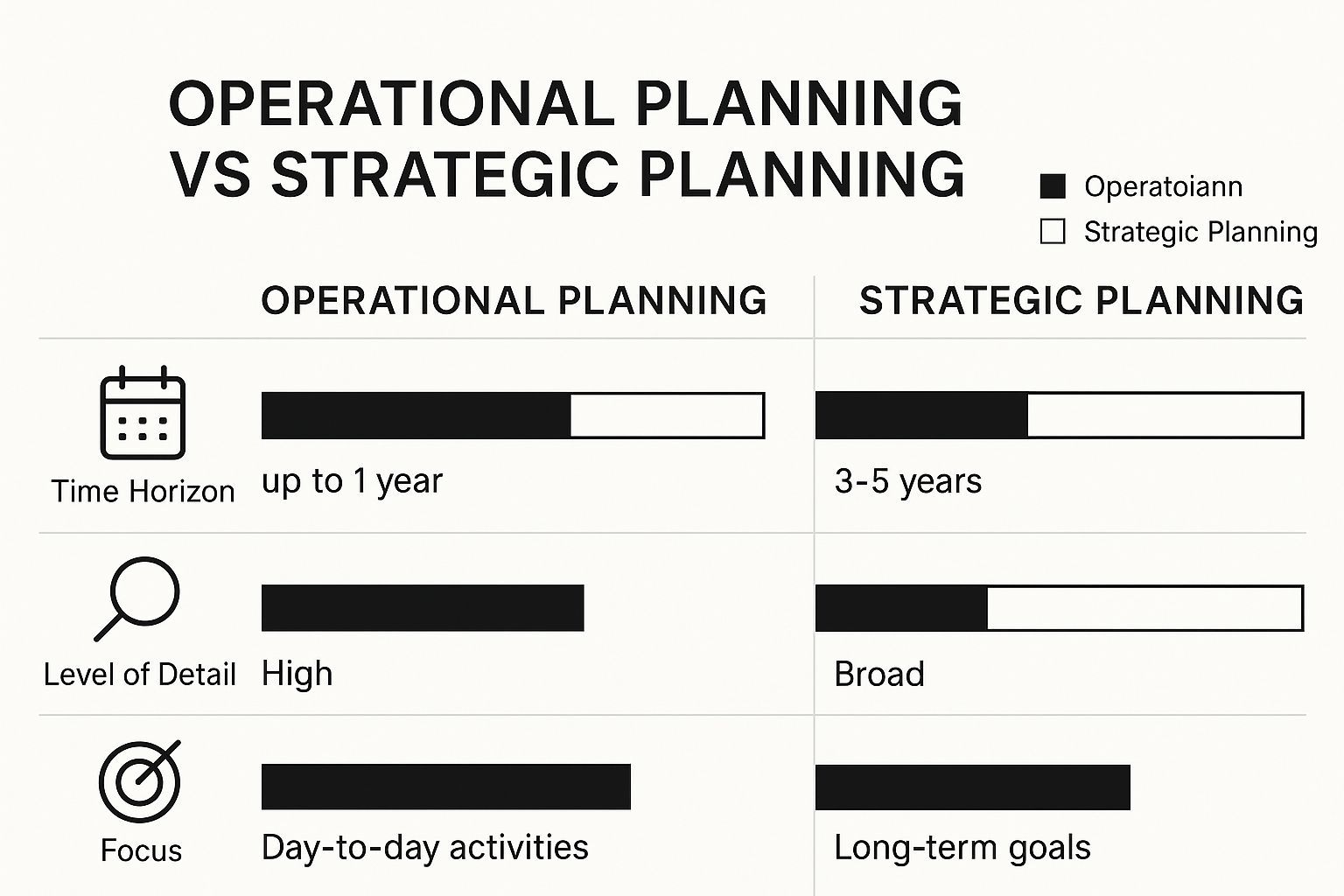
The takeaway is simple: strategic plans set the long-term course, while operational plans manage the short-term journey. To see a more detailed comparison of how these two concepts interact, check out our guide on strategic vs operational plans. Without that clear operational link, even the most brilliant strategy will likely stall from a simple lack of execution.
Why SaaS Companies Run on Operational Planning

For any SaaS business, operational planning isn't just some "nice-to-have" corporate exercise. It’s the engine that drives predictable growth. Unlike companies that sell a physical product and then walk away, the SaaS model thrives on continuous relationships, recurring revenue, and a product that's always evolving.
This fast-paced environment creates a unique juggling act. You’re constantly balancing customer acquisition with retention, shipping new features while squashing critical bugs, and scaling support without letting quality slip. Without a clear plan, these competing priorities can quickly descend into chaos.
An operational plan acts as the connective tissue for a SaaS company. It ensures the product, marketing, sales, and support teams are all pulling in the same direction, on the same timeline.
Aligning Resources with Reality
Let's get practical. Imagine your engineering team is eager to spend the next quarter on a major feature overhaul. At the same time, your support team is getting flooded with tickets about a persistent, annoying bug. How do you decide where to put your most valuable resource—developer time?
This is a classic SaaS dilemma, and it's exactly what operational planning is built to solve. It forces leadership to stop guessing and start making deliberate choices based on data and strategy. A solid plan might allocate 70% of engineering resources to new features that attract new customers, while reserving 30% for bug fixes and performance tweaks that keep current customers happy.
This creates a healthy balance between growth and retention, which is the absolute lifeblood of any subscription business.
From Ideas to Execution
A great operational plan hands every department a clear playbook, so everyone knows their role. For example, it helps to:
- Coordinate Product and Marketing: Marketing knows exactly when a new feature will launch, so they can sync up their campaigns and messaging for a bigger splash.
- Scale Customer Support: The support team can see a big release coming and staff up to handle the expected wave of questions, preventing frustratingly long wait times.
- Maintain Accountability: Every goal is tied to a specific team and a deadline. This makes it simple to track progress and hold people accountable for hitting their targets.
In the end, these plans are built on clear, repeatable actions. Documenting these steps is vital, and creating effective business process documentation is the foundation for turning ambitious goals into efficient, everyday execution.
The Building Blocks of a Great Operational Plan

It’s one thing to have a solid definition for operational planning, but what actually goes into a plan that gets results? A great operational plan isn't a stuffy document collecting dust on a shelf. It's a living, breathing blueprint made of specific, interconnected parts that guide your team's day-to-day work.
Think of it like building a high-performance engine. Every single component has to be precisely machined and fitted perfectly for the whole thing to run smoothly and powerfully. If just one small piece is missing or out of place, the entire system can grind to a halt.
An operational plan without clear metrics and resource allocation is like a car with no dashboard and an empty gas tank. It looks ready to go, but it’s not going anywhere meaningful.
Your Operational Blueprint Checklist
To bring your big-picture strategy down to earth, you need to focus on these essential building blocks. Each one answers a critical "who, what, when, and how" question that turns your vision into action. For a deeper look at how these nitty-gritty details connect to your overarching goals, check out our guide on operational vs strategic planning.
Here's what every solid plan needs:
-
Clear Objectives and Key Results (OKRs): What, exactly, are you trying to accomplish this quarter? OKRs give your team a specific, measurable, and motivating target. For instance, an objective could be "Improve New User Onboarding," with key results like "Increase activation rate by 15%" and "Reduce support tickets from new users by 25%."
-
Specific Key Performance Indicators (KPIs): How will you know if you're on track? For any SaaS business, this means keeping a close eye on your vital signs—things like Customer Acquisition Cost (CAC), Lifetime Value (LTV), and Monthly Recurring Revenue (MRR). These numbers tell you if the plan is actually working in real time.
-
Defined Timelines and Milestones: When does everything need to be done? Break down your big objectives into smaller weekly or monthly milestones. This creates a clear roadmap, builds momentum, and makes even the most ambitious goals feel manageable.
-
Smart Resource Allocation: What do you need to make it all happen? This is where you allocate your budget, assign people to specific tasks, and make sure they have the right tools and tech. A big part of this is finding ways to work smarter, not just harder. Learning how to automate business processes can be a game-changer, helping you stretch your resources and get things done faster.
What Are the Real-World Benefits of Operational Planning?
It’s one thing to define operational planning, but what does it actually do for your business? A solid plan is more than just a to-do list; it’s a blueprint for building a more profitable, efficient, and resilient company. It directly attacks common SaaS headaches like departmental silos and runaway budgets.
The most immediate benefit you'll see is a huge jump in efficiency. When everyone is working from the same playbook, you cut out wasted effort and watch productivity climb. This isn't just a hunch—companies with systematic operational planning report efficiency gains between 20-30%.

The image above really gets to the heart of it. A clear operational plan connects high-level strategy to the concrete tasks your team handles every single day. This is where those efficiency gains come from—everyone knows not just what to do, but why it matters for the bigger picture.
Boosting Your Bottom Line and Uniting Your Team
This newfound efficiency directly fuels your financial health. When you get smarter about how you spend your budget and allocate your team's time, you naturally improve performance and sidestep costly blunders. This kind of operational strength is a major factor in what your company is actually worth. You can see how these factors connect with a Business Valuation Estimator.
A solid operational plan transforms your strategy from a document into a daily reality, ensuring every dollar and hour is spent driving the business forward.
Ultimately, this whole process builds incredible team alignment. It tears down the walls that often stand between marketing, sales, and product, getting everyone pulling in the same direction. That kind of synchronized effort is the foundation of effective SaaS operations management, making you nimble enough to react to market changes and build a much stronger company.
How to Build Your First SaaS Operational Plan
Alright, let's move from theory to action. Building your first operational plan doesn't have to be some intimidating, week-long retreat. By following a simple, proven framework, you can turn those big-picture ideas into a real, actionable plan that gets your SaaS company moving.
This whole process is about creating clarity and getting everyone on the same page. It’s how you make sure every team—from product and marketing to sales and support—knows exactly what we're aiming for this quarter and how their work fits into the grand scheme of things.
Step 1: Ground Your Plan in Strategy
Your operational plan can't exist in a vacuum. It has to be a direct reflection of your high-level strategic goals. Seriously, look at your company’s main objectives for the year and ask one simple question: "What are the most important things we must accomplish in the next 90 days to move closer to that vision?"
Taking this first step is crucial. It ensures your short-term actions are always pushing the company in the right direction. It’s the difference between "busy work" and work that truly matters.
Step 2: Assemble Your Core Team
This is a team sport, not a top-down order. The single biggest mistake you can make is trying to build this plan in isolation. You absolutely need insights from the people who will actually be doing the work.
Pull leaders from your key departments into the conversation right from the start:
- Product: They can give you realistic timelines for feature development and bug fixes.
- Marketing: They'll align campaigns with product releases and the company's big-picture goals.
- Support: They have priceless insights into customer pain points and what resources are really needed.
When you take this collaborative approach, you build buy-in from day one and make sure your plan is connected to reality.
The best operational plans are co-created, not dictated. They reflect the collective wisdom and capacity of your entire team, making them far more likely to succeed.
Step 3: Define Quarterly Goals and Processes
Now that your team and strategy are aligned, it’s time to get specific. Define just a handful of clear, measurable goals for the quarter ahead. Then, you need to document the "how" by creating Standard Operating Procedures (SOPs) and playbooks.
For instance, if a goal is to improve customer onboarding, your SOP might outline the exact sequence of welcome emails, in-app tours, and follow-up calls. This level of detail removes guesswork and ensures every customer gets a consistent, high-quality experience. As your company grows, knowing where you stand is vital. You can learn more by exploring the SaaS maturity model and seeing how it shapes process development.
Finally, set up a consistent review schedule. A quick weekly check-in and a more in-depth monthly progress review are essential. This rhythm keeps the plan on track, allows for smart adjustments, and gives you a chance to celebrate the wins along the way.
Common Questions About Operational Planning
Even after you get the concept of operational planning, turning that idea into action brings up a lot of practical questions. I’ve seen leaders run into the same hurdles time and again, so let's get ahead of them.
Answering these common sticking points now will save you from major headaches down the road and help you build a plan that your team can actually use.
How Often Should We Update Our Operational Plan?
This is easily one of the most frequent—and important—questions I hear. Most teams will draft an operational plan to cover a one-year period. But treating it as a "set it and forget it" document is a huge mistake, especially in an industry like SaaS that changes on a dime.
As a rule of thumb, you should plan for a formal, in-depth review every quarter. This cadence is perfect for checking your progress against KPIs, shifting resources to what’s actually working, and responding to new market trends or opportunities.
That quarterly review doesn't mean you can’t be more nimble, though. If something isn't working, don't be afraid to make tweaks during your monthly or even weekly team check-ins. The goal is a living document that stays relevant, not a rigid script you follow no matter what.
What Is the Single Biggest Mistake to Avoid?
The most common and damaging mistake I see is when leaders create an operational plan in a vacuum. When a plan is handed down from the top without any real input from the managers and front-line employees who have to do the work, it's almost guaranteed to fail.
This top-down approach completely misses the reality of your team's day-to-day. It doesn't account for their actual bandwidth, the roadblocks in their current workflows, or the challenges they see on the ground. You end up with a plan that looks great in a slideshow but gets zero buy-in from the people who are supposed to make it happen.
Effective operational planning is a conversation, not a command. It has to include insights from every level of the company to make sure the plan is both ambitious and realistic.
Is Operational Planning Overkill for a Startup?
Not at all. In fact, you could argue it’s even more critical for a startup. When you're just starting out, every dollar and every hour of work is gold. You literally can't afford to waste effort on the wrong things.
A simple operational plan forces a small team to stay laser-focused on the handful of activities that will actually move the needle on growth and customer value. It's your best defense against "shiny object syndrome," where a good idea distracts everyone from the great idea you're already supposed to be working on.
It doesn’t need to be some 50-page document, either. For a startup, a clear one-pager outlining the core objectives, key actions, and who owns what can be a genuine superpower. It provides the clarity you need to not just survive, but thrive.
Ready to stop guessing and start building a high-performance SaaS business? SaaS Operations provides the battle-tested playbooks, templates, and SOPs you need to implement effective operational planning today. Save time, eliminate guesswork, and accelerate your growth with frameworks proven to build 8-figure businesses. Explore our proven playbooks at SaaS Operations.